Travel in 2026 is being redefined in quieter ways. The conversation has shifted from speed alone to precision—how efficiently one moves, how directly one arrives, and how much control remains in the traveler’s hands. After years of disruption, aviation is no longer rebuilding; it is recalibrating. Routes are being optimized, regional airports are gaining relevance, and the idea of “point-to-point” travel is once again becoming central.


The numbers reflect this transition. European air traffic continues its steady rise, with forecasts pointing to consistent growth over the next decade. At the same time, private aviation has seen a structural shift rather than a temporary spike. What was once perceived as an occasional indulgence is increasingly viewed as a practical solution for those navigating dense schedules across multiple cities. In France alone—particularly along the Côte d’Azur—private jet movements remain among the highest in Europe, driven by a combination of business travel, seasonal migration, and major international events.
Yet the most interesting development lies not in volume, but in behavior. Travelers are moving away from ownership toward access. The appeal of maintaining an aircraft—financially and operationally—feels increasingly out of step with a world that favors flexibility. Instead, new models are emerging that offer availability without long-term commitment, reflecting a broader cultural shift seen across luxury sectors.
Aircraft themselves are also evolving in response. Efficiency has become a defining factor, not only for environmental considerations but for operational logic. Turboprop aircraft, once overlooked in favor of larger jets, are experiencing renewed interest. Their ability to land on shorter runways and access smaller regional airports opens routes that traditional jets often bypass. In practical terms, this means avoiding congestion in major hubs and arriving closer to final destinations—an advantage that, for many, outweighs raw speed.
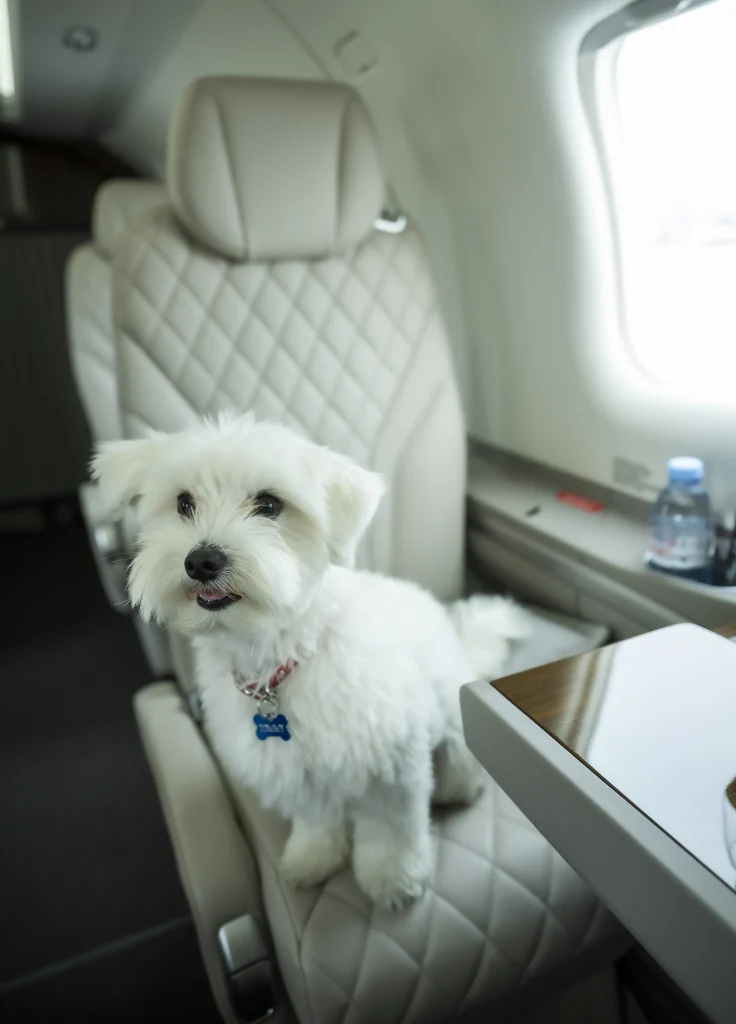
It is within this context that operators such as HansJet are positioning their latest initiatives. Rather than focusing on scale, the emphasis is placed on adaptability. Membership-based access, transparent pricing structures, and reduced lead times respond directly to the expectations of a new generation of private flyers—individuals who value time as the ultimate currency.
The choice of aircraft further reflects this shift. The Pilatus PC-12, increasingly present across European skies, embodies a different approach to private aviation. Its versatility allows access to over 3,000 airports, including those with limited infrastructure, while maintaining a level of comfort that meets modern expectations. More importantly, it represents a balance—between performance and efficiency, reach and practicality.
Alongside these operational changes, the experience of travel itself is being reconsidered. The emphasis is no longer on visible excess, but on seamless execution. Quiet cabins, direct routes, minimal waiting times—these elements define a new standard that feels less performative and more considered. Even ancillary services, from ground transfers to itinerary planning, are becoming more integrated, forming a continuous journey rather than a series of disconnected steps.
There is, perhaps, a broader question at play. As aviation continues to evolve, what does luxury in travel actually mean today? Is it measured in altitude and speed, or in the ability to move without friction? Increasingly, the answer leans toward the latter.
In this landscape, private aviation is no longer about spectacle. It is about precision, access, and the subtle art of removing everything that stands between departure and arrival. HansJet’s latest offering enters this conversation not as a disruption, but as part of a wider transformation—one that suggests the future of flying may be defined less by scale, and more by intention.