Leading women increasingly shape culture in ways extending far beyond a single profession. The most recognizable figures today move naturally between fashion, cinema, philanthropy, and global influence while creating a presence that exists well beyond individual appearances. Public attention may arrive through beauty or visibility, though longevity often depends on something much more difficult to define: identity. The women who remain memorable rarely follow trends. They establish a language of their own.
Few figures embody that evolution as naturally as Sara Sampaio. Over the years, Sara built a career moving comfortably between high fashion, international campaigns, runway success, and growing work within film and entertainment. Her rise never felt sudden. Instead, it developed through consistency, international recognition, and an ability to move between very different spaces while maintaining a distinct personal image. Born in Portugal, Sara first entered the international fashion world through modeling before quickly attracting attention from some of the industry’s largest names. Campaigns, magazine covers, and global runway appearances gradually expanded her profile, transforming her into one of the most recognized Portuguese models of her generation. Her work soon reached luxury houses and major fashion publications across Europe and the United States, while collaborations with internationally known brands introduced her to wider audiences.
Among the defining chapters of her career came her long relationship with the world of major fashion campaigns and runway productions. Sara became widely recognized through her work with leading global fashion names and developed a reputation for balancing classic glamour with contemporary appeal. Beyond fashion itself, her profile gradually expanded toward cinema and acting, reflecting a transition increasingly visible among modern models. Fashion today rarely limits careers to one direction. Movement between industries increasingly became part of the new creative language.

At the same time, Sara established another quality often separating enduring public figures from temporary visibility: versatility. Certain personalities become attached to one image. Others evolve continuously. Editorial campaigns, beauty partnerships, film projects, international events, and red-carpet appearances gradually positioned her inside a wider conversation extending beyond fashion alone.
That made her appearance during Cannes feel entirely aligned with the atmosphere surrounding the festival itself. Every year, Cannes becomes something larger than cinema. Film remains central, though fashion, art, culture, philanthropy, and international society increasingly shape the rhythm of the city. Between premieres, private dinners, charity events, and late-night gatherings, another world quietly unfolds alongside the official festival schedule.
Sara attended the annual amfAR Gala Cannes 2026 at Hotel du Cap-Eden-Roc in Cap d’Antibes, one of the festival’s most anticipated philanthropic evenings. Over the years, the event established itself as one of Cannes’ defining occasions, bringing together fashion, cinema, and global personalities in support of AIDS research and awareness initiatives. The evening frequently produces some of the strongest fashion moments of the entire festival period.
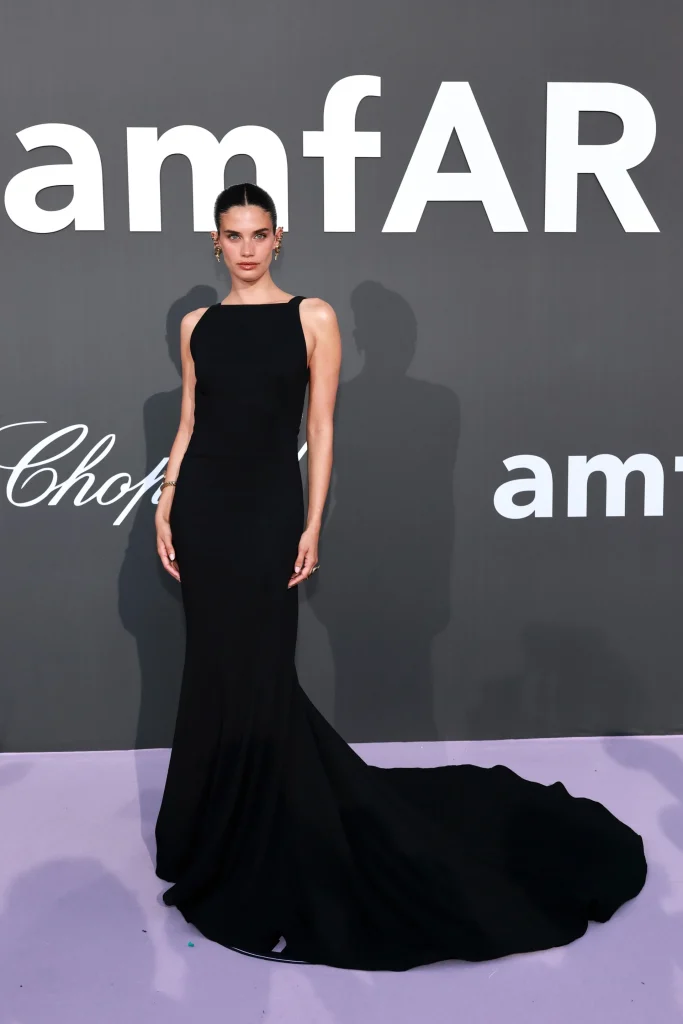
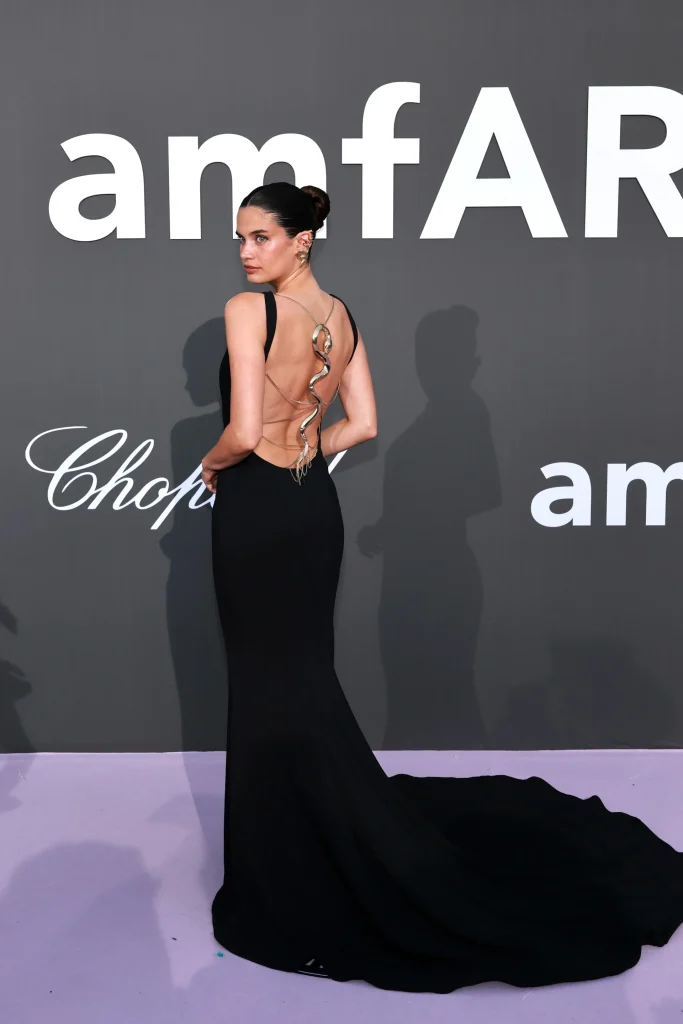
For the occasion, Sara appeared in Roberto Cavalli Archive, wearing a look carrying the dramatic confidence long associated with the house. The black evening gown followed a fitted silhouette before opening into a flared tulip-shaped skirt that created movement and sculptural structure simultaneously. From the front, the design maintained precision and elegance. The back introduced an entirely different narrative.
The most striking element arrived through a dramatic open-back construction featuring a sculptural golden snake spine jewel extending along the body and connected through delicate gold chains. The detail immediately recalled Roberto Cavalli’s long fascination with sensuality, symbolism, and powerful animal references. The effect felt architectural and almost cinematic, transforming jewelry into part of the silhouette itself rather than an accessory placed afterward.