Jewellery has always maintained a special relationship with femininity because both are often expressed through detail rather than declaration. A bracelet received at a particular moment, a ring worn every day without thinking, a pendant associated with a place or a memory — these objects gradually become part of personal identity. Across generations, jewellery has functioned as a quiet form of storytelling, preserving emotion, memory, and individuality in a way few accessories can.
For more than four decades, Pandora has built its world around that idea. Founded in Copenhagen in 1982 by Per Enevoldsen and Winnie Enevoldsen, the company began as a small family jewellery business before growing into one of the world’s largest jewellery houses. Pandora later transformed the market with its charm bracelet concept, allowing wearers to build collections connected to personal stories and milestones. Today the brand reaches customers in over one hundred countries and remains one of the most recognizable names in contemporary jewellery. What also distinguishes Pandora is its relationship with craftsmanship: despite its global scale, the House continues relying on detailed hand-finishing techniques and carefully developed production processes.
For its latest creative direction, Pandora turns toward one of nature’s shortest yet most evocative moments — summer rain. There is something strangely memorable about a sudden rainfall during warm weather. Light changes, colors deepen, surfaces shift, and familiar places briefly appear different. The experience lasts only minutes, yet often remains vividly remembered.
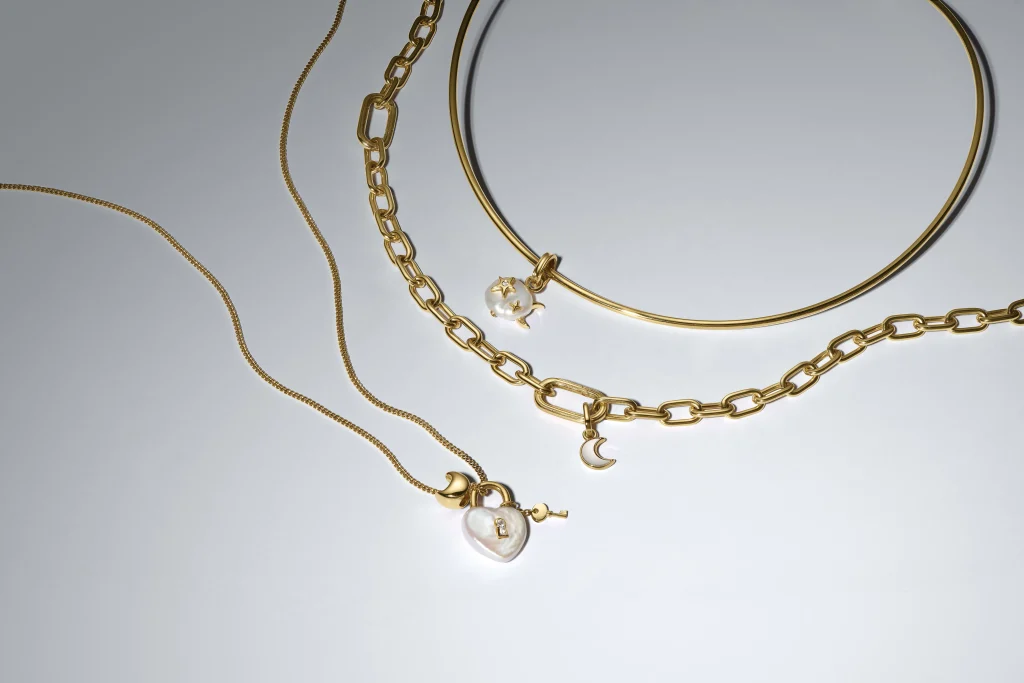
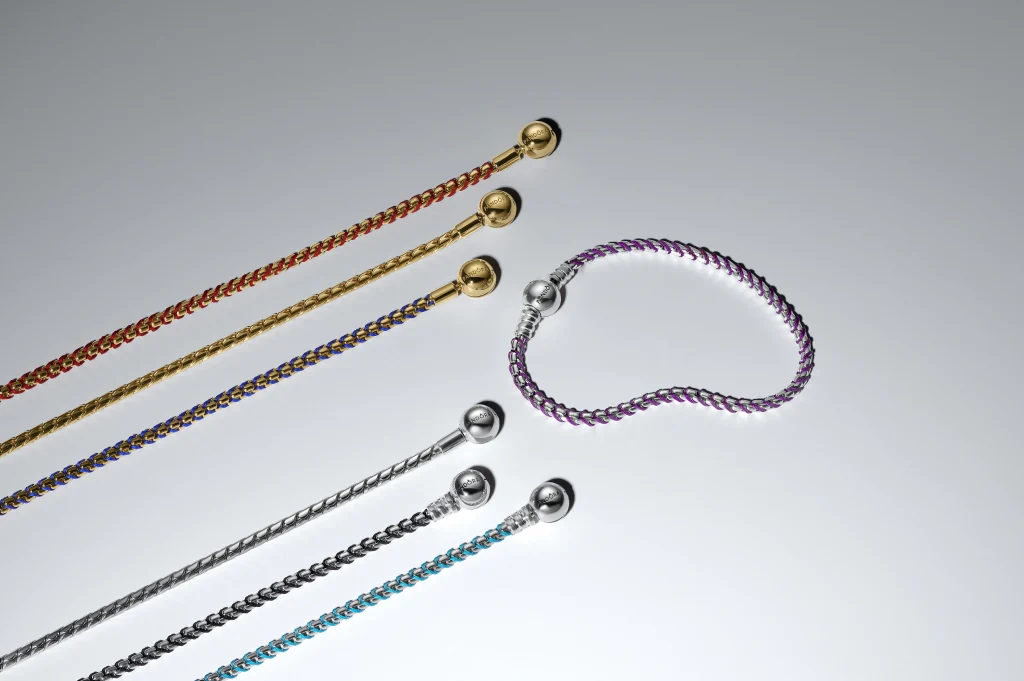
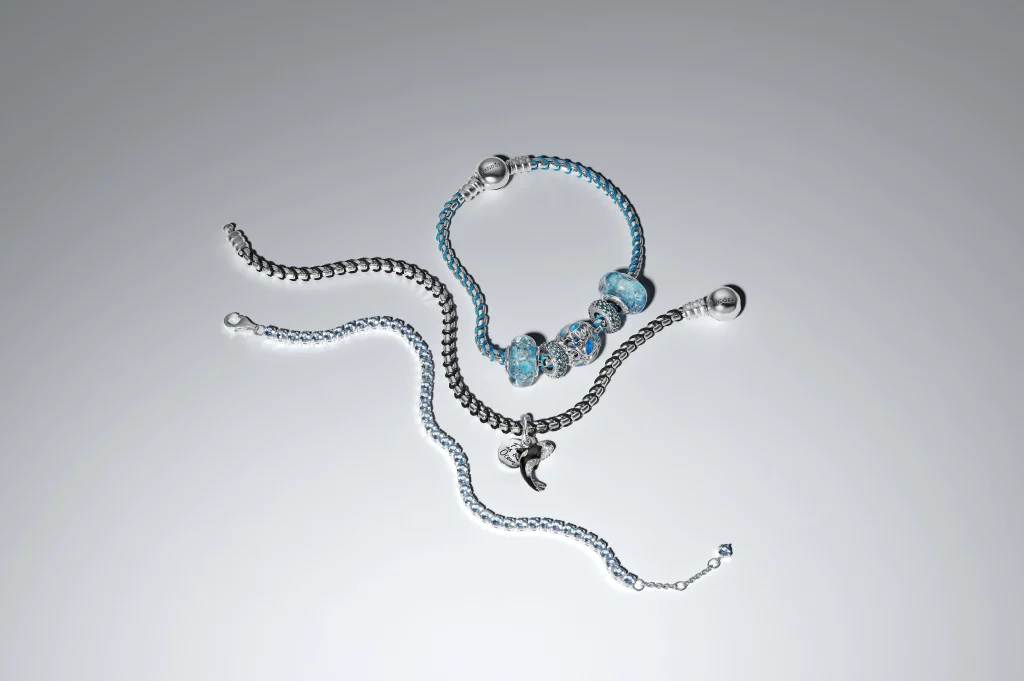
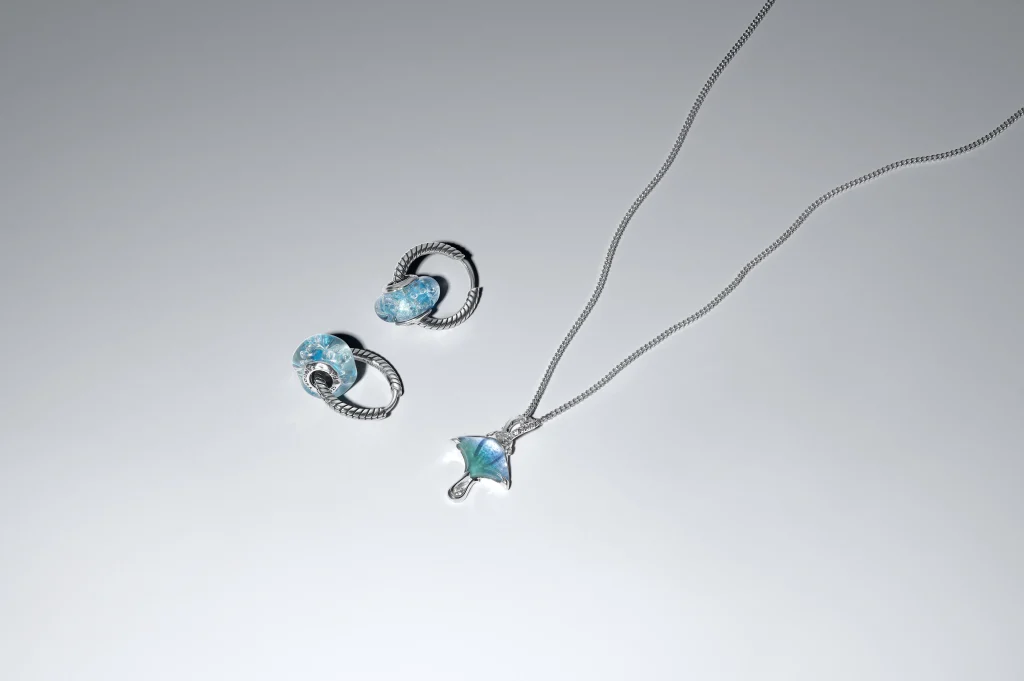
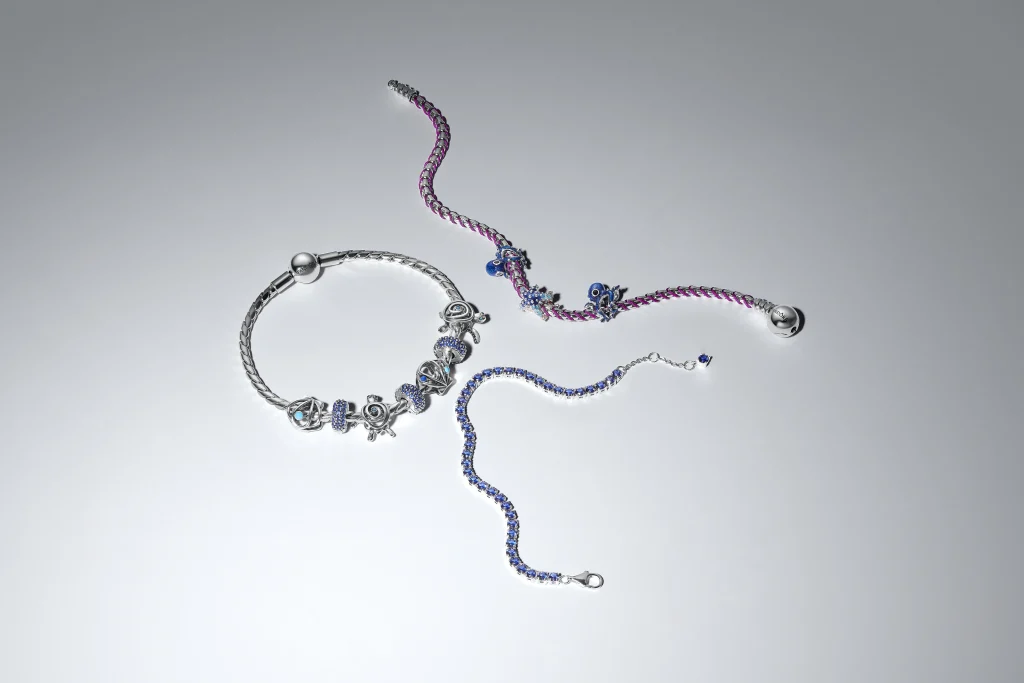
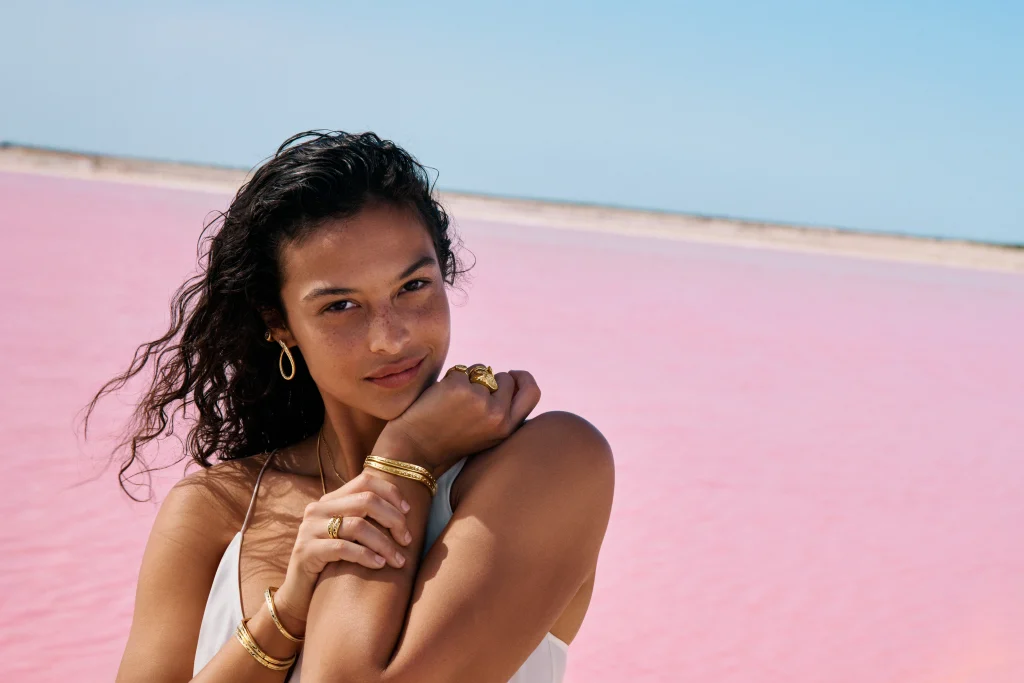
This atmosphere became the starting point for PANDORA ESSENCE, a 22-piece line inspired by movement, water, and nature’s changing rhythm. Signet rings, hoop earrings, and bracelets appear throughout the collection, accompanied by asymmetrically placed stones designed to capture changing light from different angles. The visual language avoids rigid geometry and instead follows softer, more organic lines that feel shaped by movement itself.
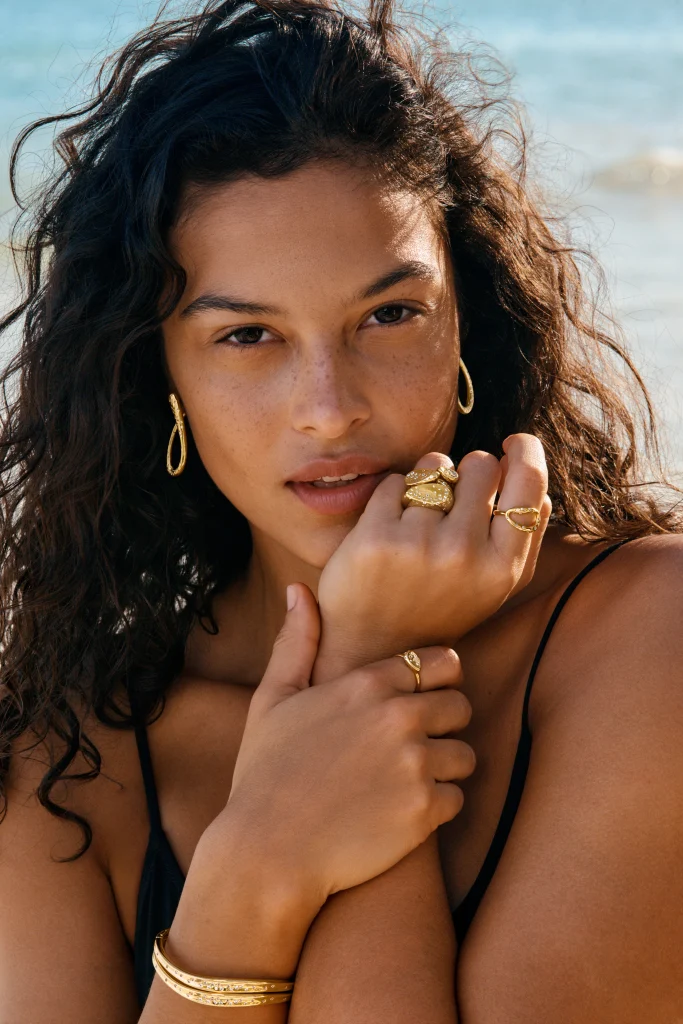
Across the collection, certain pendants and rings recall rocky coastlines slowly transformed over time by wind and water. Curved bracelets introduce another visual rhythm, borrowing from the movement of waves and natural currents. Materials and forms appear less controlled and more instinctive, as though nature itself participated in the design process. Particularly interesting is Pandora’s use of flush-setting techniques. Stones appear integrated directly into surrounding metal surfaces, creating a smooth transition where crystals seem almost suspended inside flowing forms. The eye moves naturally across the jewellery, discovering details gradually rather than all at once.
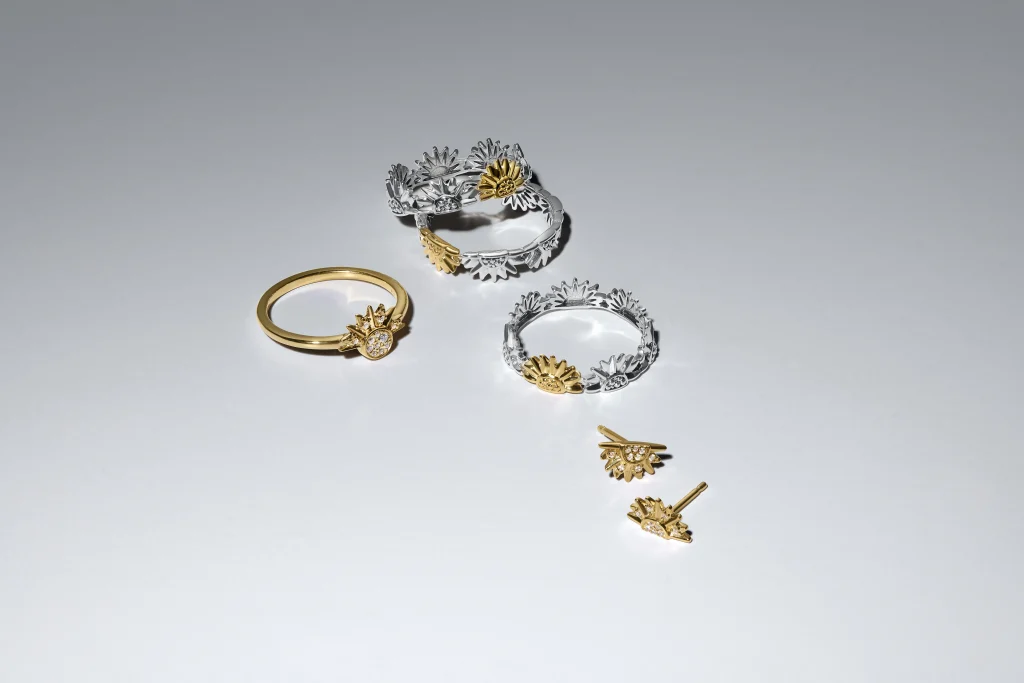
Two-tone combinations pairing sterling silver with gold-plated surfaces create another dimension. The interaction between colors introduces contrast while maintaining softness, allowing pieces to work individually or layered together alongside personal jewellery already collected over time.
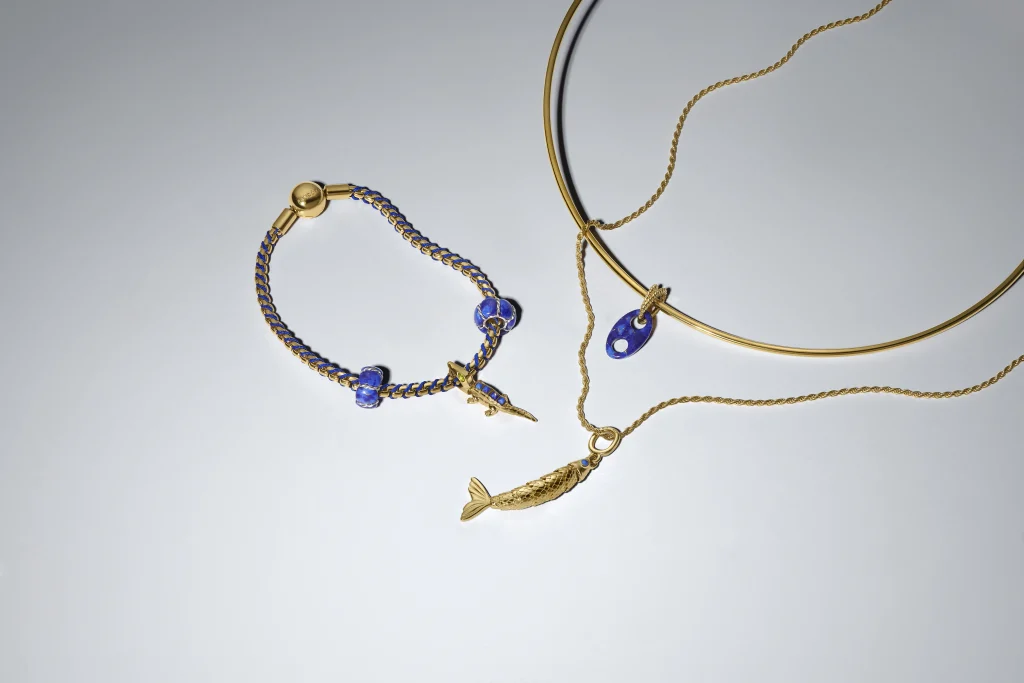
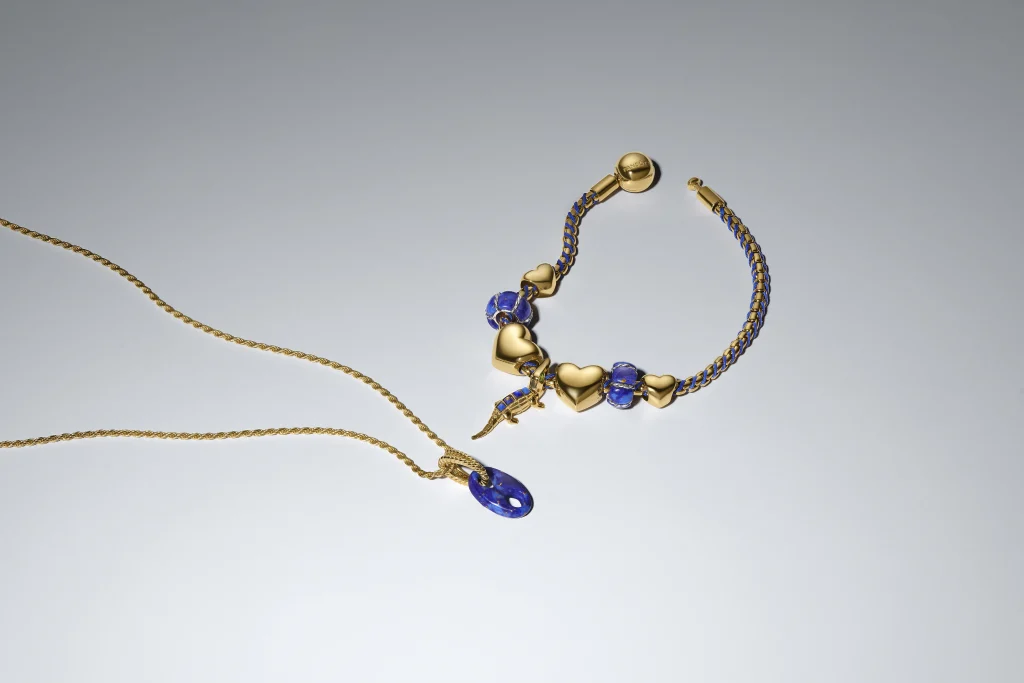
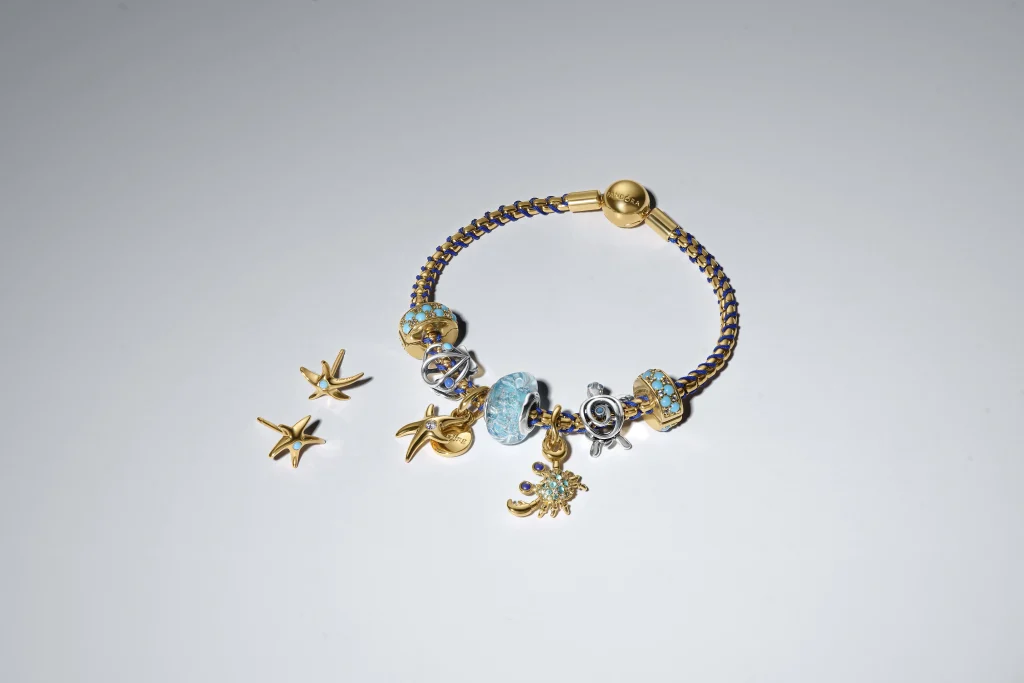
Elsewhere, Pandora Moments approaches the same inspiration from another perspective. Fish charms with moving details, Murano glass pieces recalling objects shaped by salt and sea water, and sun-inspired earrings continue the relationship with nature and travel memories. Pandora Timeless adds rings, necklaces, and tennis bracelets in shades recalling watermelon, lemon, and mint — colors immediately associated with warm days and distant coastlines.
Creative Directors Francesco Terzo and A. Filippo Ficarelli describe the collection as inspired not simply by nature itself, but by nature as a language. Their references eventually arrive at Lake Como, where changing light, water, and atmosphere continuously alter perception throughout the day.
Rain disappears quickly. Water changes shape constantly. Perhaps that explains why Pandora chose these references so carefully. Certain moments remain beautiful precisely because they never stay still.