For many, the journey to acquire a diamond begins and often ends with the familiar “4Cs”: carat weight, color, clarity, and cut. While these foundational characteristics certainly provide a starting point for evaluating a gemstone, a truly discerning eye understands that the story of a diamond’s visual appeal extends far past these initial metrics. The true magic, the captivating dance of light that defines a diamond’s allure, resides primarily in its diamond light performance – a complex interplay of brilliance, fire, and scintillation, all governed by the masterful art of diamond cut precision.
This discussion aims to equip prospective buyers with a deeper understanding, moving beyond simple grading reports to appreciate the intricate mechanics behind a diamond’s visible splendor. It reveals how meticulous craftsmanship in cutting transforms a rough stone into an object of intense beauty, capable of reflecting and refracting light in spectacular ways. When you comprehend the profound influence of a diamond’s cut, you gain the power to select a stone that not only meets your specifications but truly radiates with exceptional life and character.
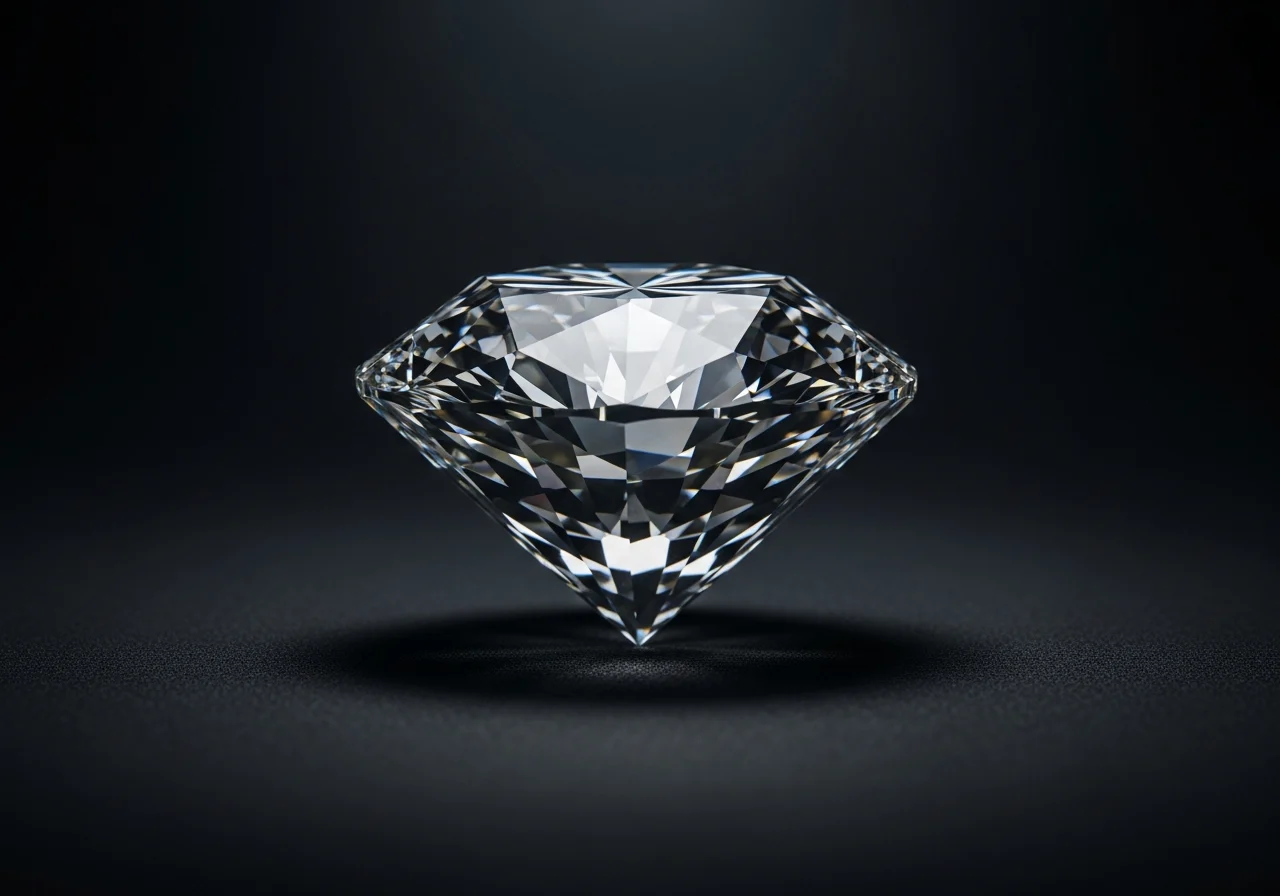
A diamond’s beauty is not merely about its size or absence of flaws; it is fundamentally about how it interacts with light. This interaction is what we term diamond light performance, and it comprises three key components that collectively create the stone’s captivating sparkle:
These three elements do not act independently. Instead, they work in concert, with a diamond’s cut being the conductor of this luminous orchestra. A superior cut balances these aspects, ensuring that no single element overshadows the others, resulting in a harmoniously radiant gemstone.
Among the 4Cs, the cut is arguably the most critical factor influencing a diamond’s beauty, as it directly governs its diamond light performance. While carat weight determines size, and color and clarity affect the stone’s inherent purity, it is the diamond cut precision that unlocks a diamond’s potential for brilliance, fire, and scintillation. A diamond’s cut is not about its shape (round, princess, oval, etc.), but rather about the exact proportions, symmetry, and polish of its facets.
Consider the journey of light as it enters a diamond. For maximum impact, light must enter the top, reflect off the internal facets, and return to the viewer’s eye. A perfectly executed cut ensures that light does not leak out of the bottom (pavilion) or sides of the diamond. When a diamond’s proportions are too shallow, light escapes through the bottom, making the stone appear dull and lifeless. If the proportions are too deep, light escapes through the sides, also diminishing its sparkle. The exact angles and relationships between the facets are paramount; even tiny deviations can significantly reduce the amount of light returned, thereby hindering the diamond’s brilliance, fire, and scintillation.
Master cutters spend years honing their skills, understanding how to orient each facet to optimize light return. This involves precise calculations and meticulous execution, aiming for a perfect internal mirror effect. The polish of the facets also plays a role; a smooth, blemish-free surface allows light to travel and reflect without obstruction, enhancing the overall light performance.
Most reputable grading laboratories, such as the GIA (Gemological Institute of America) and AGS (American Gem Society), provide cut grades. The GIA, for instance, grades round brilliant diamonds from Excellent to Poor. While an “Excellent” cut grade is a strong indicator of quality, it represents a range, not a singular ideal. Two diamonds with the same “Excellent” grade might display different levels of diamond light performance. This is where a deeper understanding of diamond cut precision becomes invaluable.
For those seeking truly exceptional light return, understanding what makes an “ideal” or “super ideal” cut is key. These terms refer to diamonds cut to very specific, narrow parameters that are known to maximize brilliance, fire, and scintillation. This often involves precise facet alignment that creates specific patterns, such as the “Hearts and Arrows” phenomenon visible in many well-cut round brilliant diamonds. This pattern, seen under a special viewer, indicates superior optical symmetry and precision, directly correlating with outstanding light performance.
When evaluating a diamond, it’s beneficial to look beyond just the summary cut grade. Delve into the details of the grading report, focusing on:
These specific measurements, when combined in optimal ratios, contribute to superior diamond light performance. It’s often helpful to consult resources that provide ideal ranges for these parameters, as they can vary slightly based on the diamond’s shape.
For the discerning buyer, several tools offer visual insights into a diamond’s light handling, going beyond what a standard grading report can convey:
Viewing a diamond through these tools, or even asking a jeweler to demonstrate them, can provide concrete evidence of its diamond cut precision and its potential for magnificent diamond light performance. It allows for a direct comparison that numeric grades alone cannot offer.
While the allure of a large carat weight or a flawless clarity grade can be strong, remember that a diamond’s visual impact hinges primarily on how well it interacts with light. A diamond with lower color or clarity grades but an exceptional cut can often appear more vibrant and beautiful than a diamond with high color and clarity but a mediocre cut. This understanding provides immense power to buyers, allowing them to prioritize what truly matters for a diamond’s observable beauty.
To make an informed choice, consider the following approach:
By focusing on diamond light performance and the underlying diamond cut precision, you move beyond the conventional wisdom of the 4Cs. This approach empowers you to select a diamond that not only possesses desirable characteristics on paper but also displays extraordinary beauty and life when viewed. The result is a gemstone that genuinely captivates, a lasting symbol of beauty that sparkles with an intensity born from masterful craftsmanship.