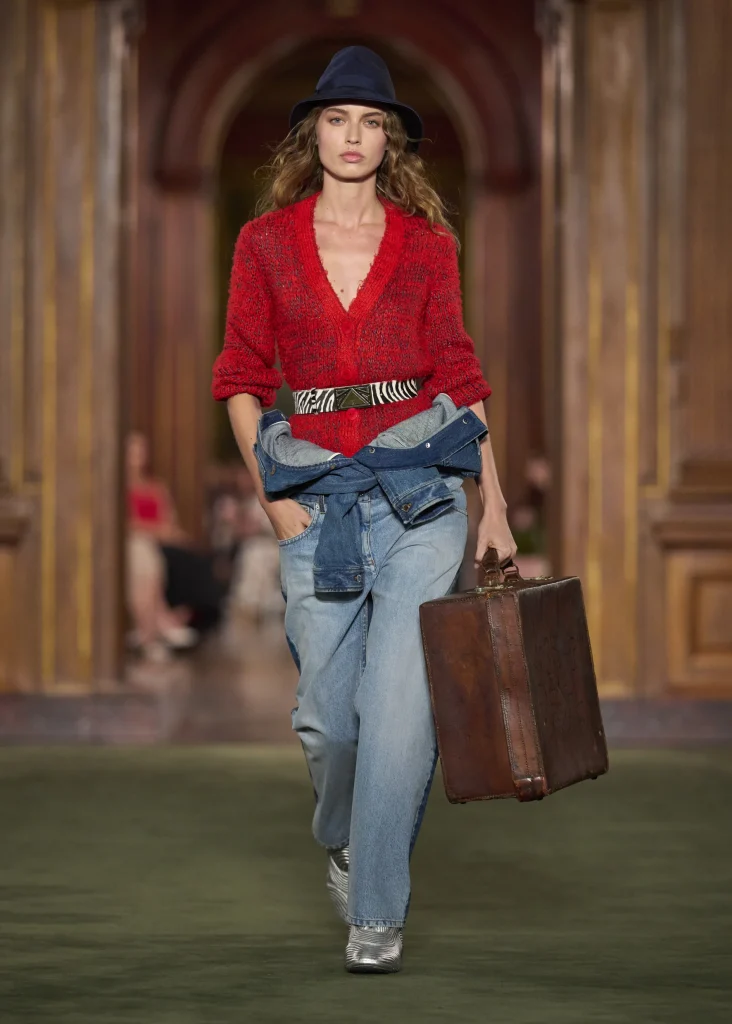
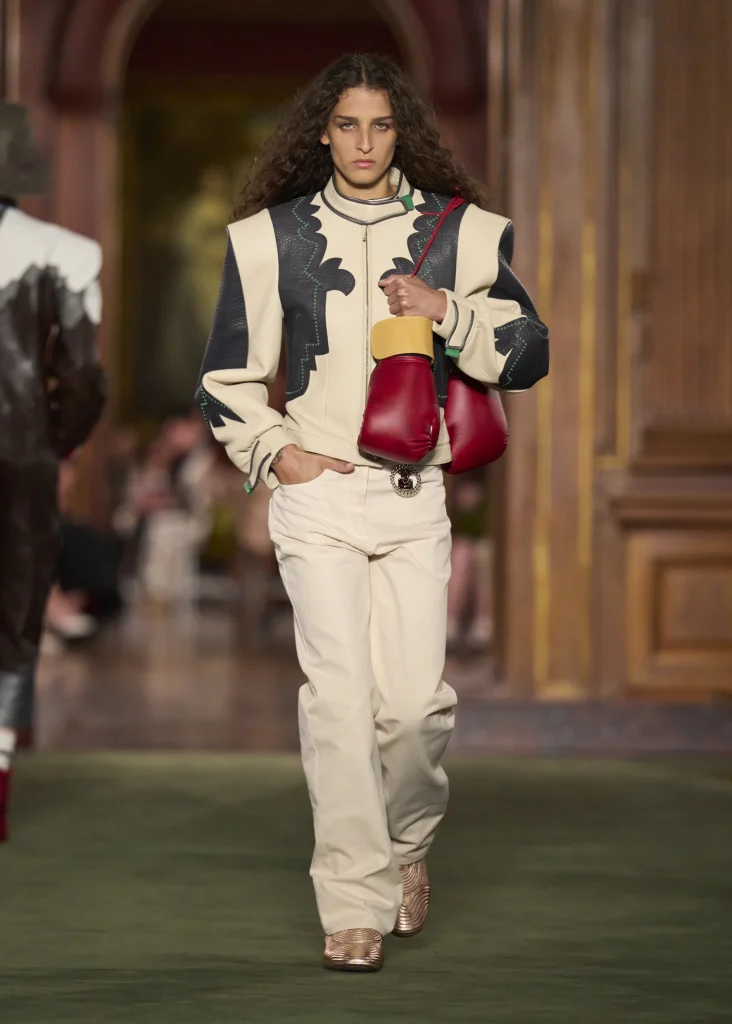
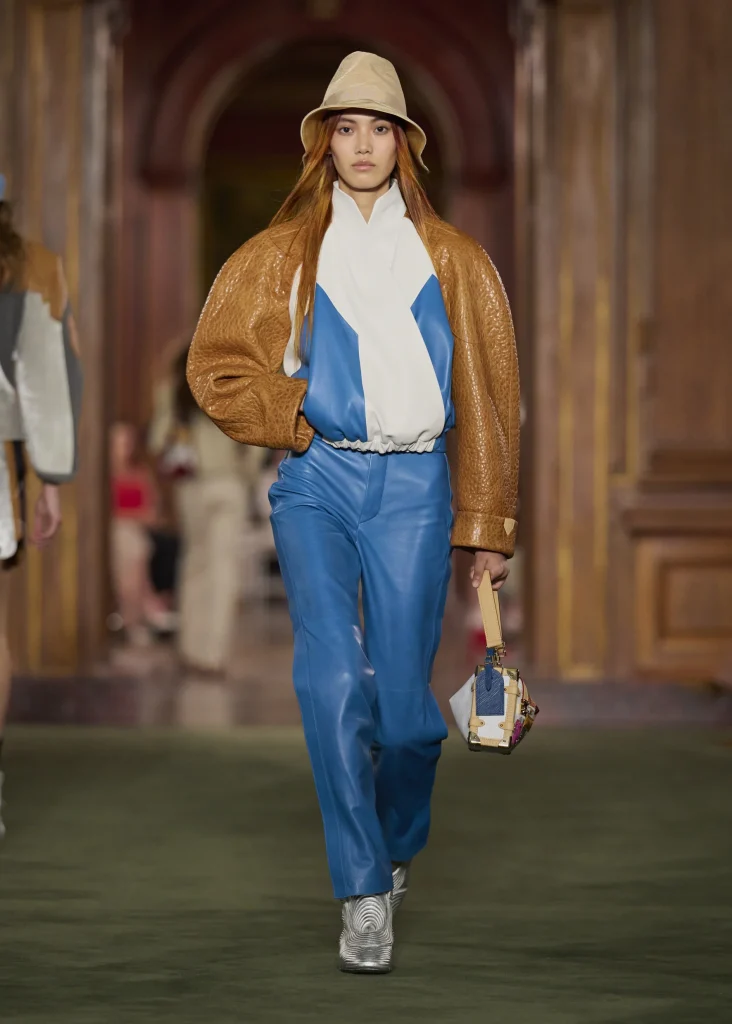
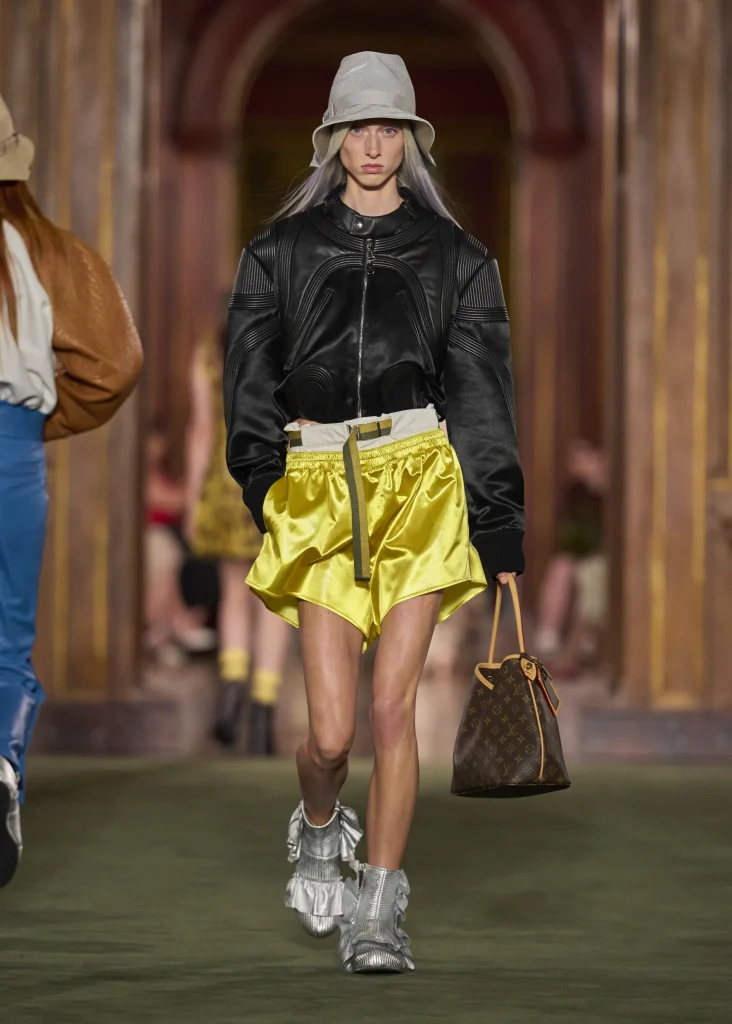
Cities speak to designers, history enters collections, and places become emotional points of departure. Certain collections begin with fabrics or silhouettes. Others begin with ideas. According to cultural tourism studies, New York and Paris consistently remain among the most influential cities globally for fashion, art, and cultural impact, shaping visual language far beyond their borders. And what happens when two cities carrying entirely different energies begin speaking to each other through clothing?
For Louis Vuitton Cruise 2027, Nicolas Ghesquière approaches fashion through a conversation between worlds. Paris and New York become central characters in a collection built around contrast, movement, memory, and cultural exchange. Different realities meet throughout the collection: Uptown and Downtown, old and new, Europe and America, refinement and spontaneity. New York itself has always existed through opposing identities. It never speaks through one voice alone. It lives through coexistence.
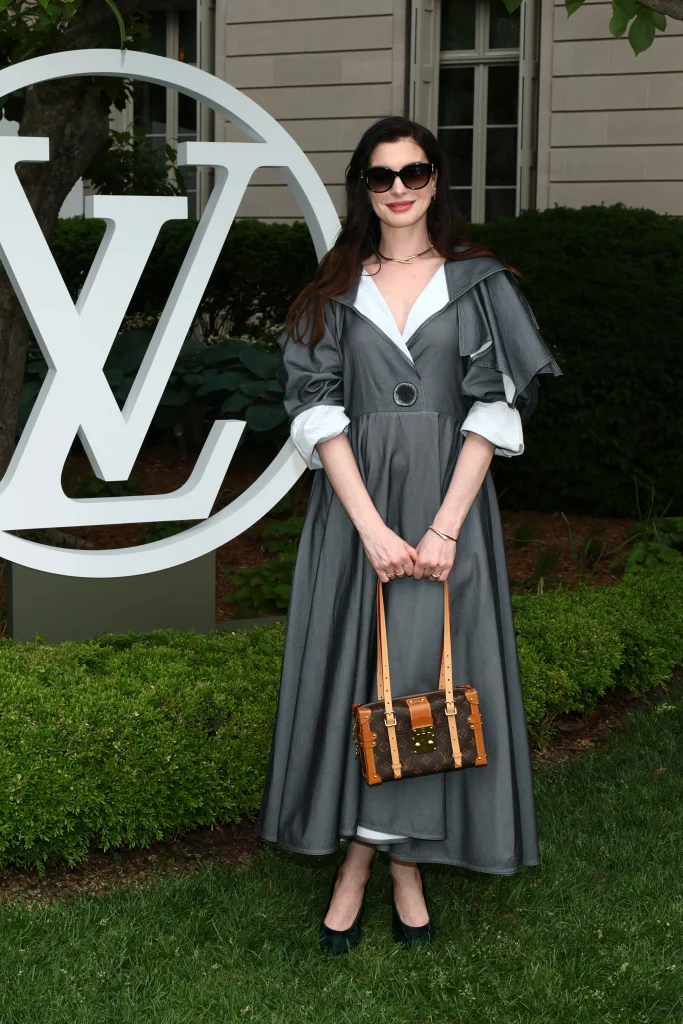
That idea becomes one of the collection’s strongest themes. New York continues functioning as a city built from layers — a place where different histories, communities, and influences exist simultaneously. The city carries contradictions comfortably. Past and future frequently occupy the same street. Formality sits beside rebellion. Grandeur exists alongside improvisation. These opposing energies become part of its identity and, for Cruise 2027, become part of Louis Vuitton’s narrative as well. Ghesquière also connects New York’s cultural influence with Louis Vuitton’s own international language. Both possess a kind of universality. New York operates as destination, aspiration, and cultural reference point simultaneously. Louis Vuitton maintains a similar position in fashion. The collection therefore moves into conversations surrounding Pop Art, Pop Culture, and Pop Luxury — not as decoration alone, but as cultural language.
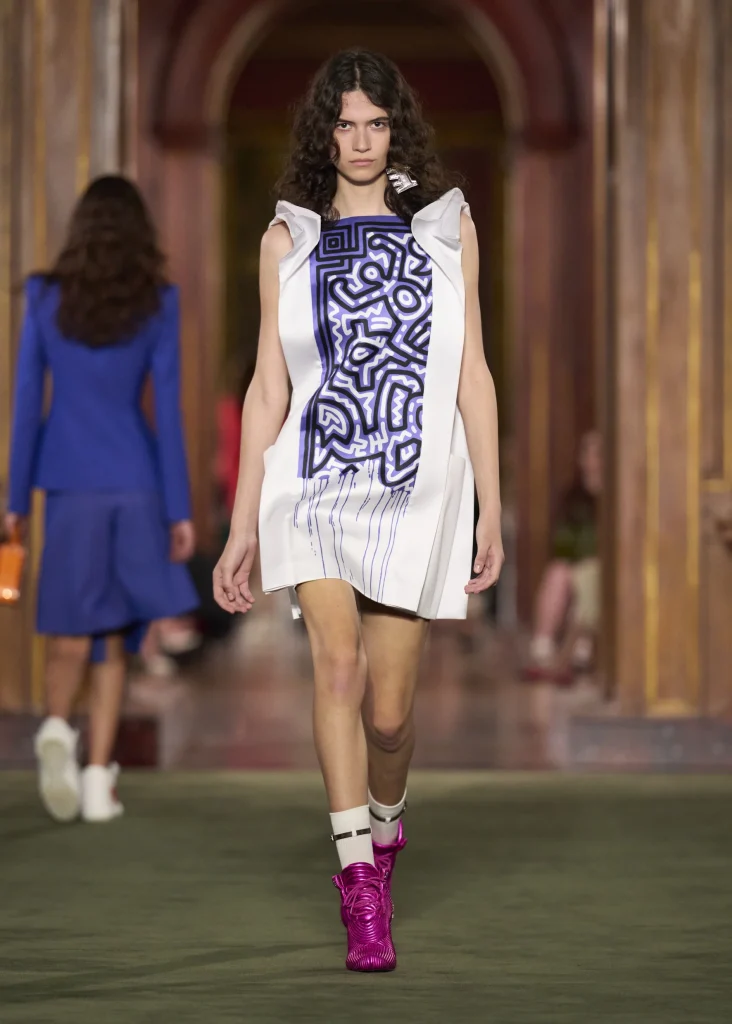
One discovery inside Louis Vuitton’s archives became particularly significant during development. A leather trunk from the 1930s, transformed years later by artist Keith Haring into a creative surface, introduced an unexpected dialogue between heritage and contemporary expression. What began as coincidence eventually became a source of inspiration throughout Cruise 2027. Selections from Haring’s visual work now appear across garments and accessories, turning clothing itself into another canvas carrying his unmistakable visual language. The connection feels natural. Haring’s work always carried movement, energy, and accessibility. His art entered public spaces and reached audiences beyond galleries. Cruise 2027 approaches fashion through similar ideas. Clothing becomes part of broader conversations surrounding culture, memory, and identity.
The collection presentation itself took place at the Frick Collection, introducing another layer of meaning. The setting creates dialogue between American perspectives and European heritage, making it a fitting environment for a collection concerned with movement between worlds. Different historical periods and visual references begin interacting with one another inside those rooms.
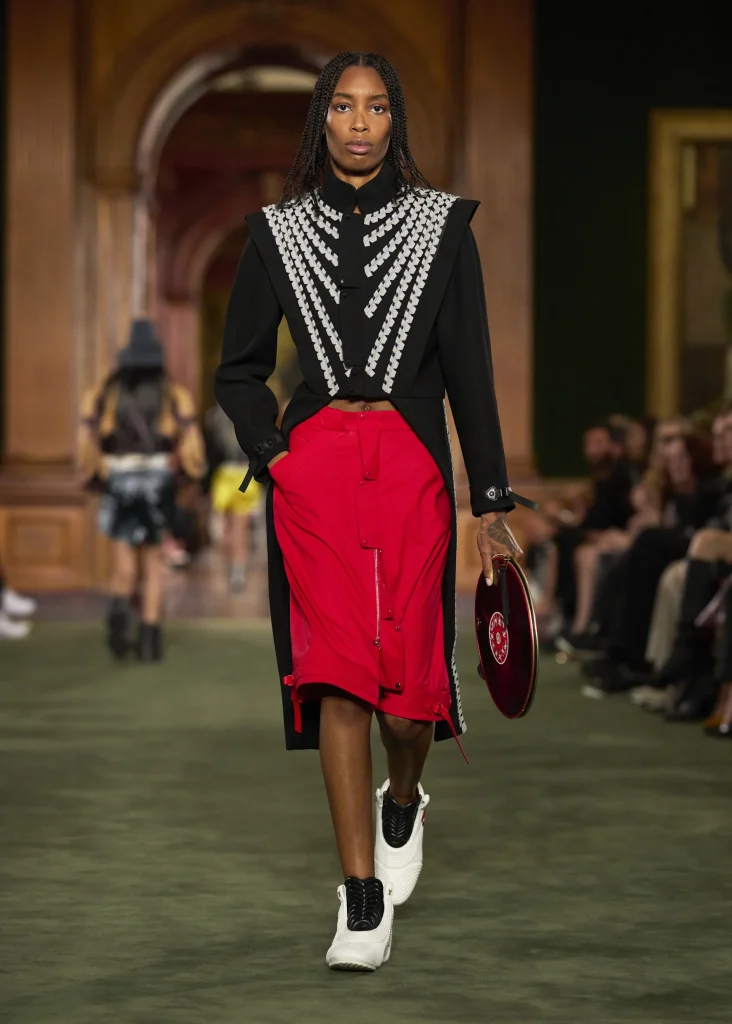
Throughout the collection, American wardrobe foundations receive reinterpretation through French savoir-faire. Denim, jersey, and leather appear repeatedly, though approached through a lens shaped by craftsmanship and construction. The collection explores ideas traditionally associated with American women — movement, energy, independence, and confidence — while introducing European references connected to history and technique. Visual details continue expanding this dialogue. Fragments of New York culture appear throughout the designs: arcade machines, automobile references, textured leather surfaces, and echoes of Gilded Age grandeur. Rather than functioning as direct reproductions, these references become recontextualized inside clothing and accessories. Memory enters fashion through details.
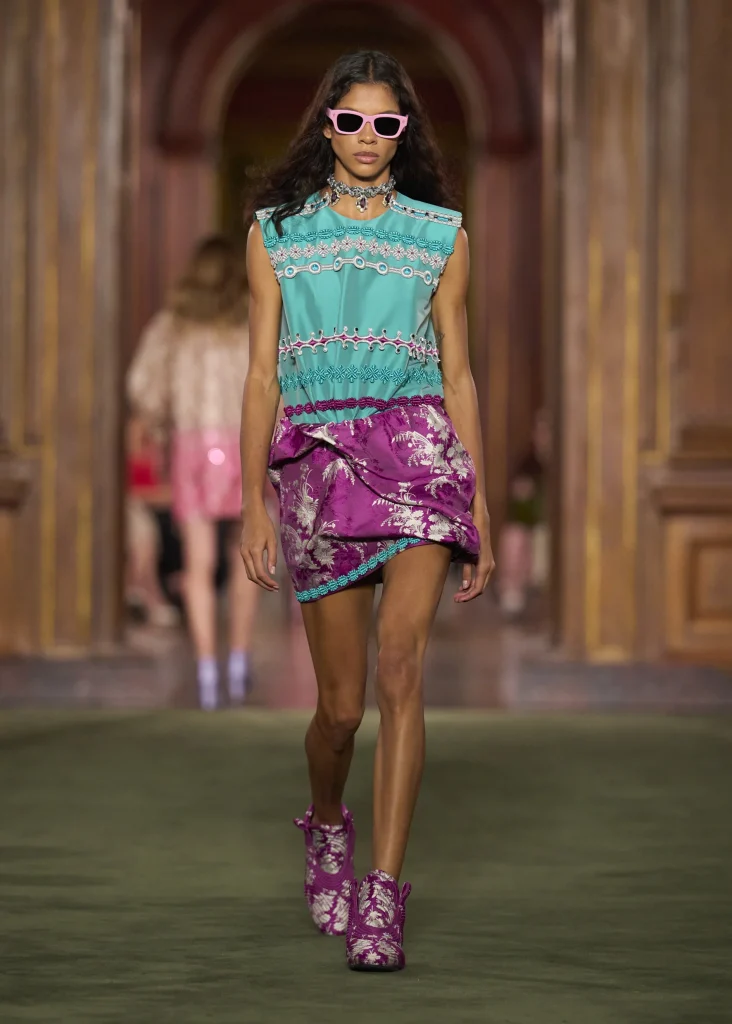
Color also plays an important role throughout Cruise 2027. Bright tones and energetic shades introduce optimism and movement. Graffiti-inspired embellishments and sequined embroidery create unexpected visual effects, occasionally producing surfaces resembling lace or intricate textile structures. Contemporary figures move through rooms associated with another era, creating a tension between memory and imagination.