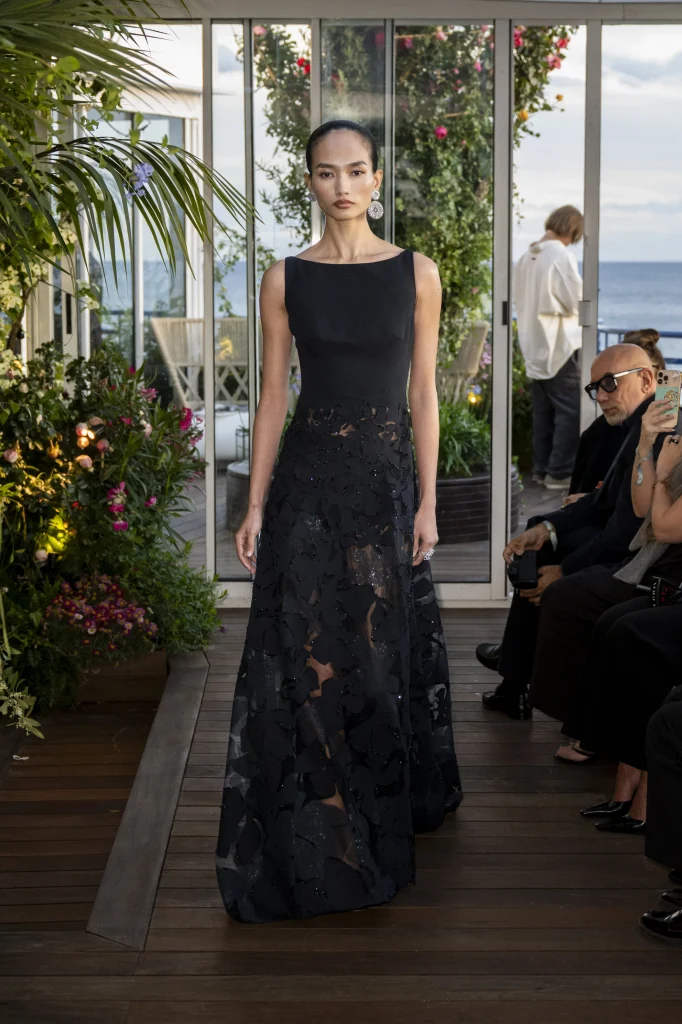
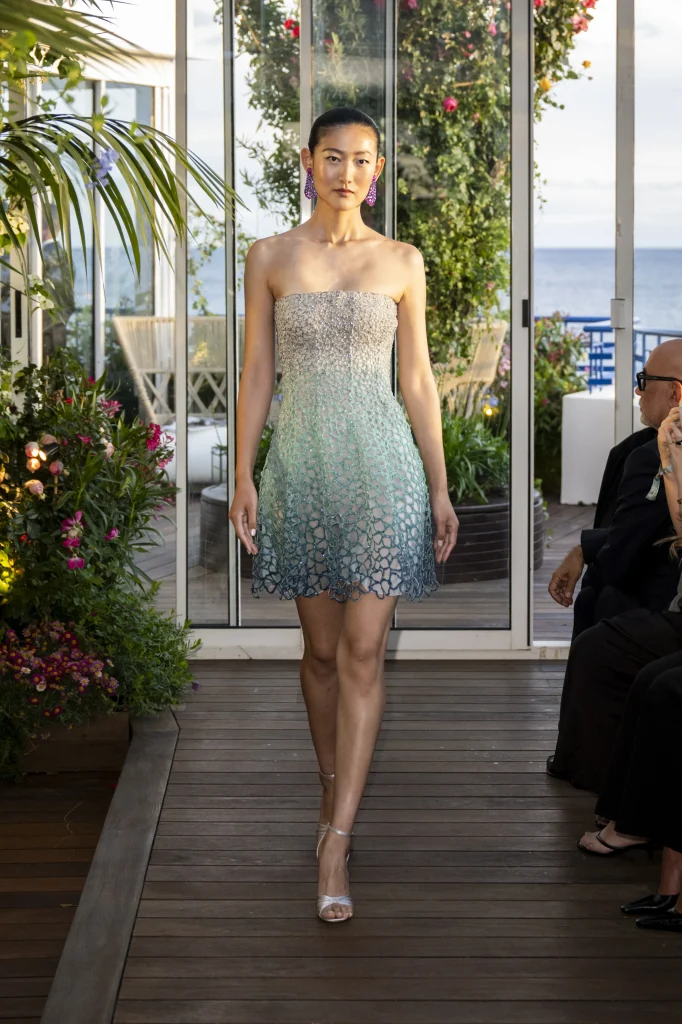
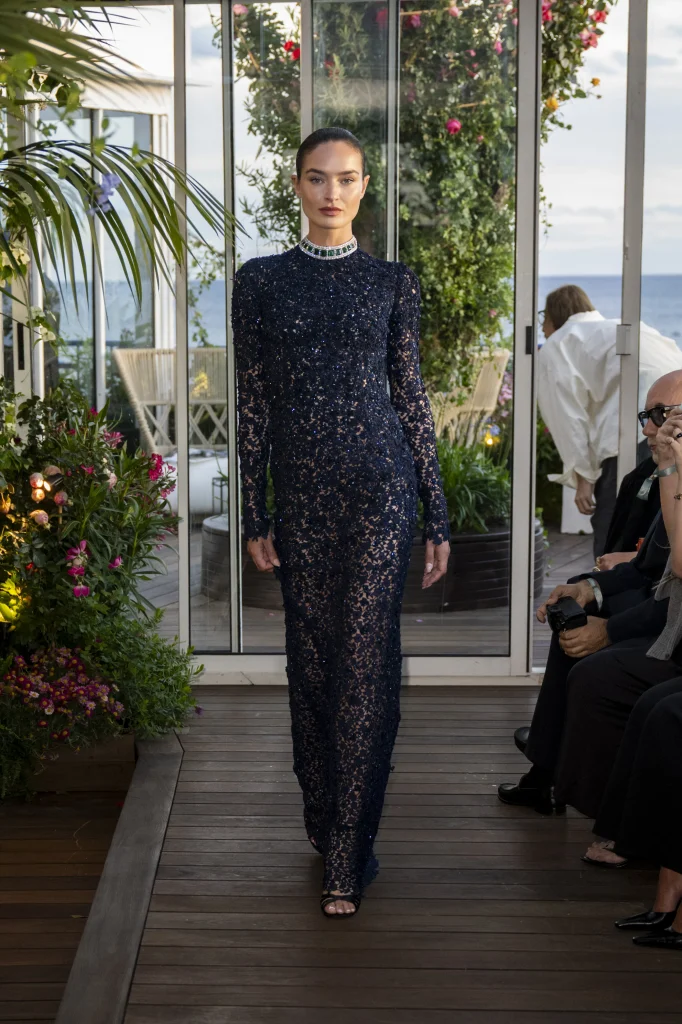
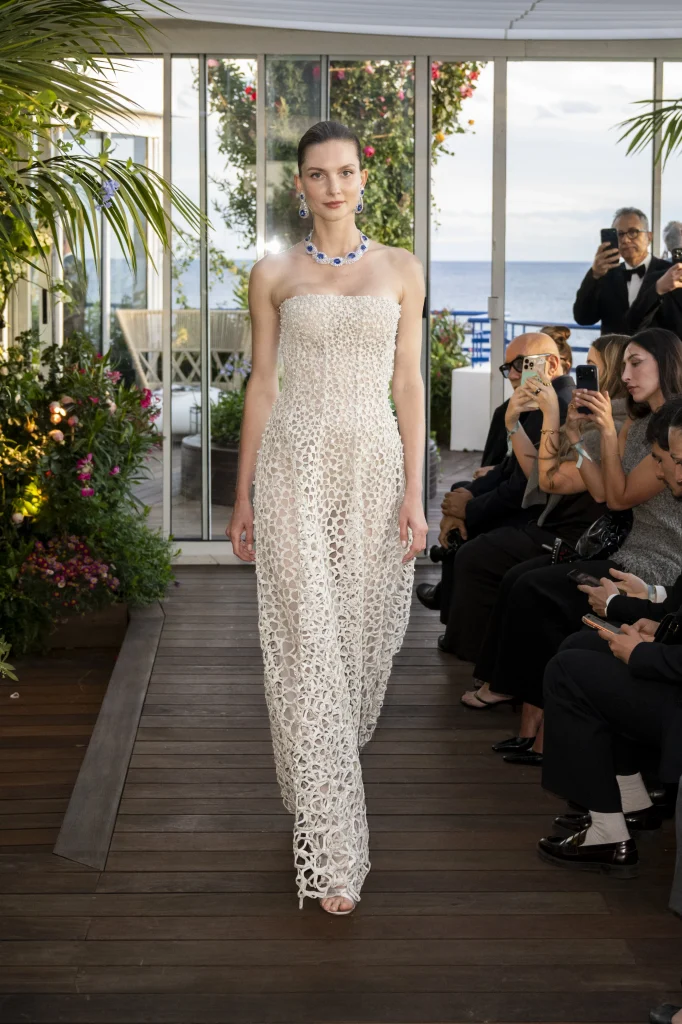
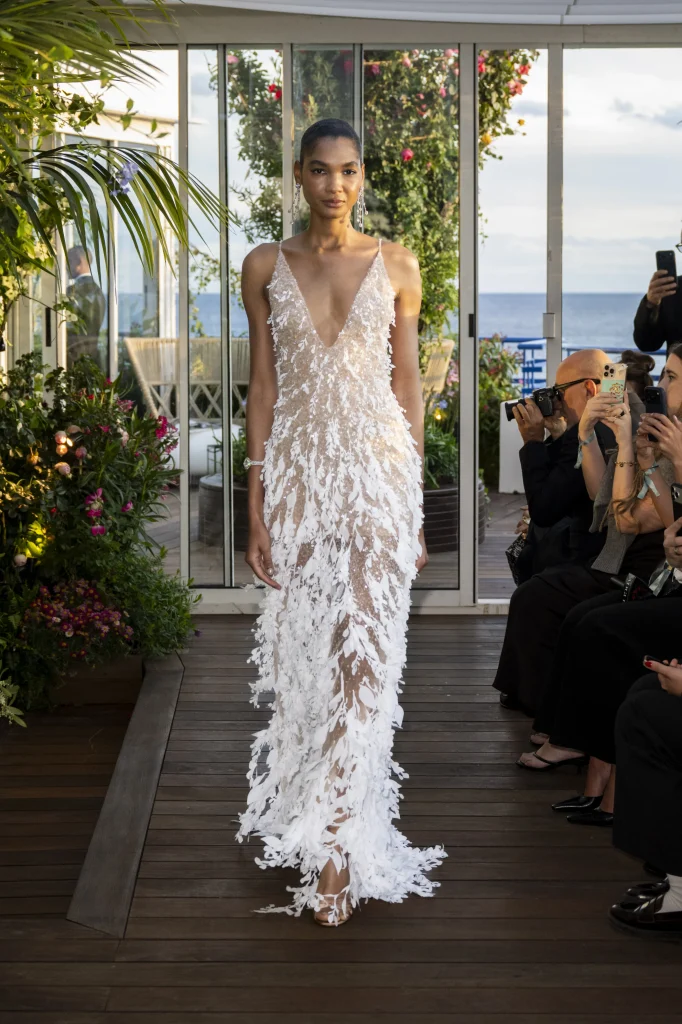
Fashion and jewelry maintained a close relationship for decades, though recent collections increasingly erase the line separating the two worlds entirely. Clothing no longer functions solely as a setting for precious pieces, while jewelry increasingly moves beyond accessory status and enters the center of creative conversations. According to recent luxury market analysis, approximately 74% of consumers say emotional connection and storytelling influence purchasing decisions in luxury fashion and accessories, reinforcing how audiences increasingly seek pieces connected to atmosphere and identity rather than products alone. And when couture and high jewelry begin speaking the same visual language, where does one end and the other begin?
During the 79th Cannes International Film Festival, Caroline Scheufele presented the 2026 Caroline’s Couture collection at the Hôtel Martinez, introducing the fourth chapter of a project gradually developing into an increasingly ambitious extension of the Chopard universe. The presentation arrived during one of fashion’s most visually charged periods of the year, where red carpets, cinema, and high jewelry continue existing side by side. Yet this collection approached Cannes through a different perspective. Not through celebrity appearances alone, but through craftsmanship itself.
Caroline Scheufele described the collection as a personal challenge and an opportunity to move beyond familiar territory. Her intention reached considerably further than creating couture silhouettes. She wanted fabrics capable of translating the colors of Chopard gemstones into clothing, collaborations with artisans possessing the same level of mastery as Chopard jewelers, and dresses designed in direct dialogue with Haute Joaillerie itself. The idea immediately shifted couture into a different category. Clothing and jewelry stopped functioning separately.
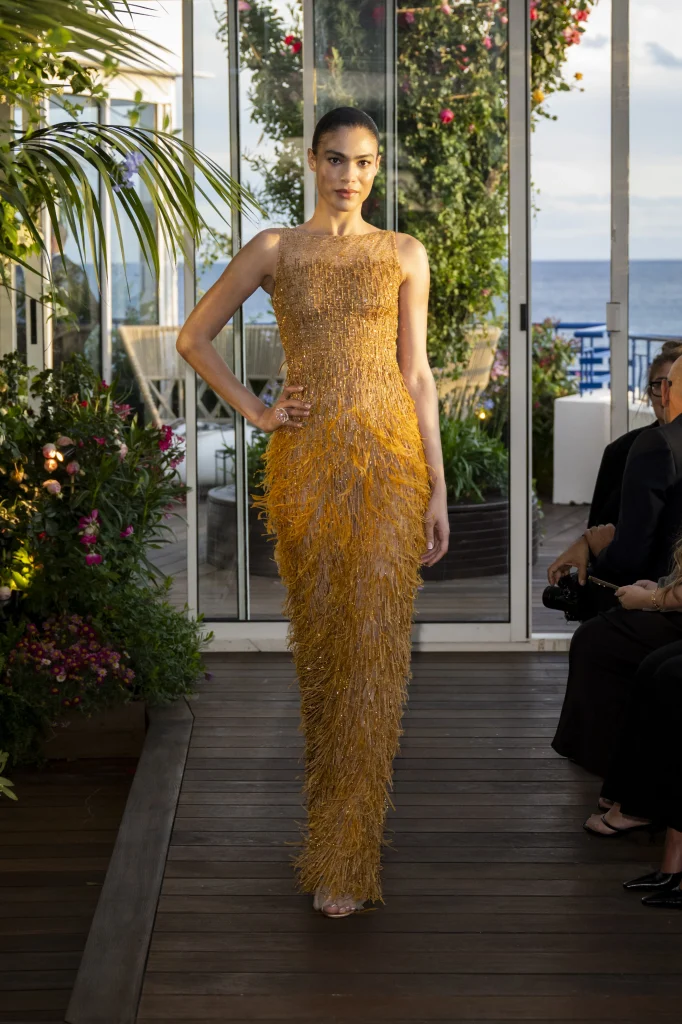
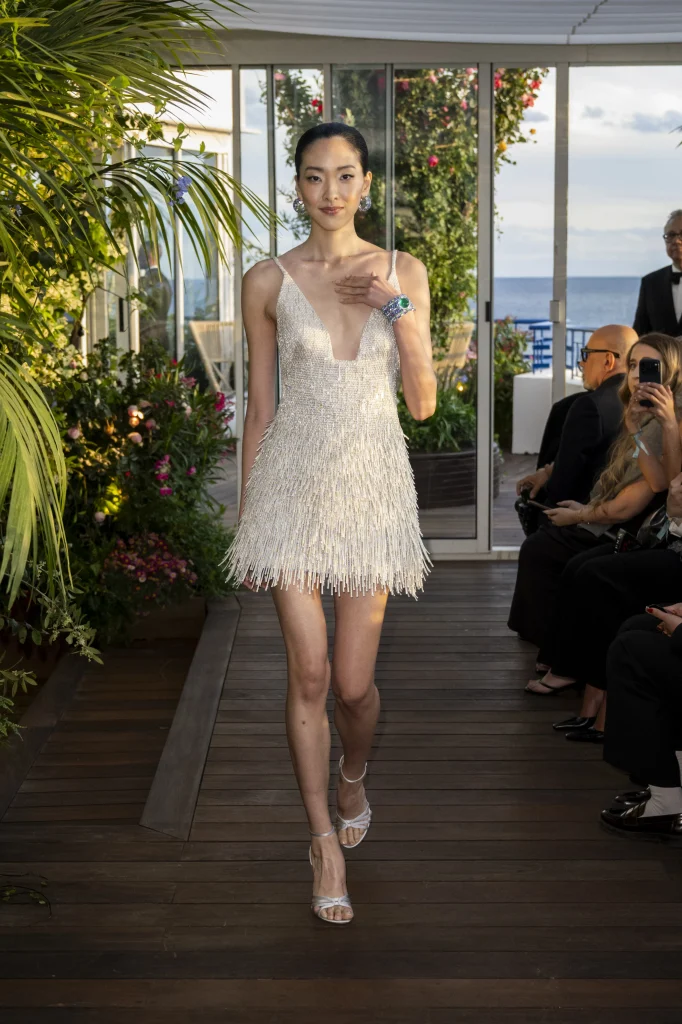
The collection, inspired by the theme Miracle, approached fashion through color, material, and visual emotion. Precious stones became reference points. Fabrics absorbed tones traditionally associated with Chopard creations, transforming gemstone palettes into movement and volume. Instead of placing jewelry onto garments afterward, the garments themselves appeared to emerge from the same visual universe.
The relationship between Caroline Scheufele and Cannes also extends far beyond this latest presentation. Chopard has maintained a longstanding connection with the Festival itself, while Caroline’s role inside that world continues occupying a particularly important place. In 1997, she redesigned the Palme d’Or and helped establish Chopard as one of Cannes’ defining creative partners. Since then, the worlds of cinema, jewelry, and glamour repeatedly intersected around her work.
That history gives Caroline’s Couture a certain natural place inside Cannes itself. The festival frequently creates memorable fashion moments, though collections presented there often become part of a larger atmosphere shaped by cinema and imagination. Cannes exists somewhere between reality and projection. Fashion often functions similarly.
The 2026 collection embraced exactly that quality. Color appeared richer, fabrics more expressive, and craftsmanship remained central throughout. Inspiration drawn from nature translated into visual poetry rather than direct representation. Precision embroidery, movement, and textures worked together to create silhouettes carrying softness and structure simultaneously. Recent reports surrounding the collection repeatedly highlighted its floral references and dreamlike atmosphere, reinforcing the emotional quality surrounding the presentation