Fashion changed considerably over recent years, and the strongest conversations increasingly moved beyond collections, runway calendars, and seasonal releases. Luxury houses today think far beyond garments because clothing rarely exists in isolation anymore. People experience fashion through environments, architecture, materials, objects, and atmosphere. The way a brand feels often begins long before a fitting room or a purchase enters the experience. And if clothing tells one story while physical space tells another, can a fashion house ever create a complete identity?
Consumer behavior increasingly suggests otherwise. Research from global retail studies shows that 73% of consumers consider experience an important factor influencing purchasing decisions, a number that explains why physical spaces continue gaining significance across luxury retail. People no longer enter stores simply to buy something. They enter spaces expecting emotion, memory, and connection. Fashion therefore increasingly moved toward creating environments capable of expressing the same values, mood, and personality found inside collections themselves.
Few Houses understand this relationship with the same precision as Alaïa.
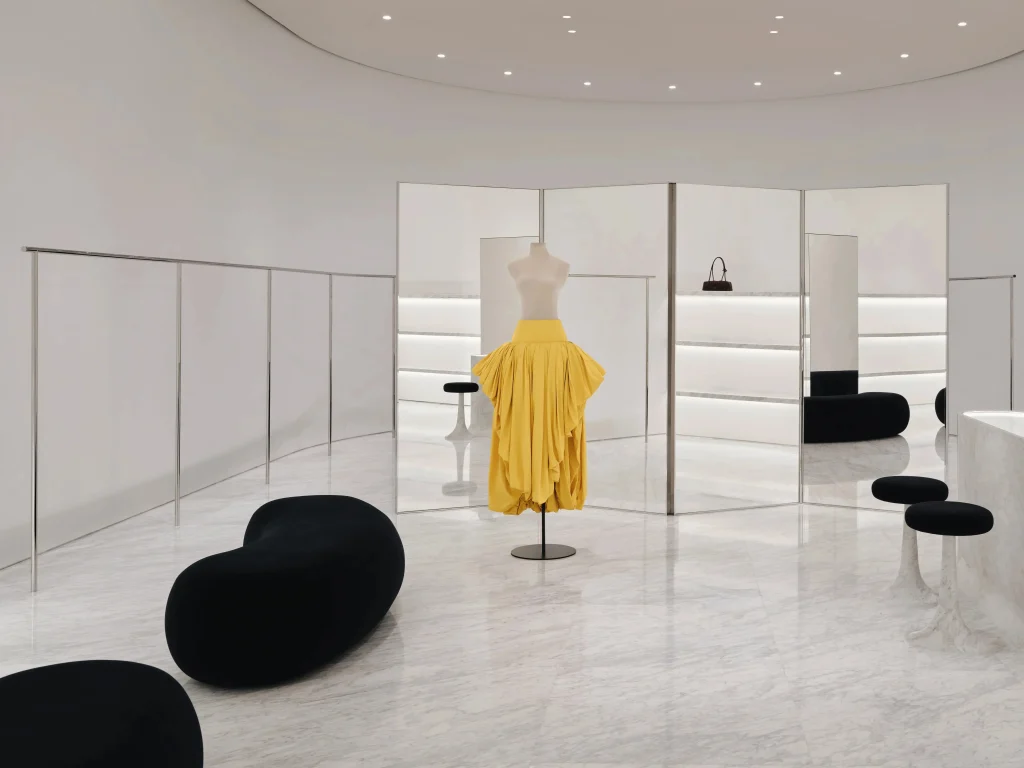
Since its founding in 1964, Alaïa maintained a very distinct place within fashion culture. Azzedine Alaïa approached creation according to his own rhythm and his own standards, largely operating outside traditional systems and expectations. His work consistently focused on intimacy, precision, and an unusually close understanding of the female form. Clothing, for him, carried emotional proximity. Garments followed the body closely and developed a relationship with movement, structure, and softness that felt highly personal. That same sensitivity extended well beyond fashion itself. Interiors, furniture, art, and architecture regularly occupied equal importance because Alaïa never viewed environments as secondary details surrounding clothing. The environment itself formed part of the conversation.
That idea continues through the Maison’s newest retail destination conceived by Swedish architecture studio Halleroed, where Alaïa’s visual language enters physical space through a highly considered approach to form, proportion, and materiality. The store immediately introduces a sense of movement. Curves replace rigidity, and organic lines create continuity throughout the interior. Walls no longer behave like strict architectural divisions. Instead, they move almost like gestures across the space itself, allowing surfaces and volumes to maintain visual continuity from one area to another. Marble appears uninterrupted, creating a stronger sense of flow and visual calm.
The façade introduces another layer of identity. Alaïa’s recognizable pattern returns through illuminated perforations distributed rhythmically across the exterior, creating a dialogue between structure and light that immediately establishes familiarity without relying on logos or overt statements. Inside, the visual direction remains highly restrained. A monochromatic world of black and white creates simplicity and clarity while allowing material choices to become central. Carrara marble and stainless steel introduce architectural strength and precision, while nude leather within fitting rooms softens the atmosphere and creates warmth. That contrast feels particularly important because intimacy always remained central to Alaïa’s philosophy.
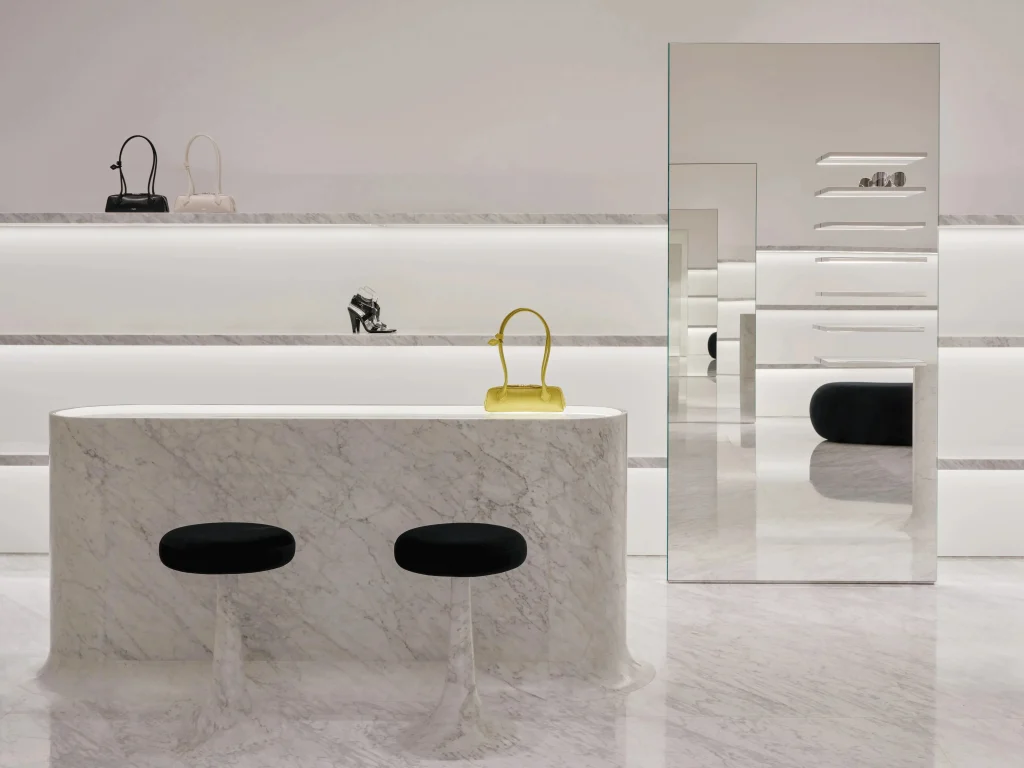
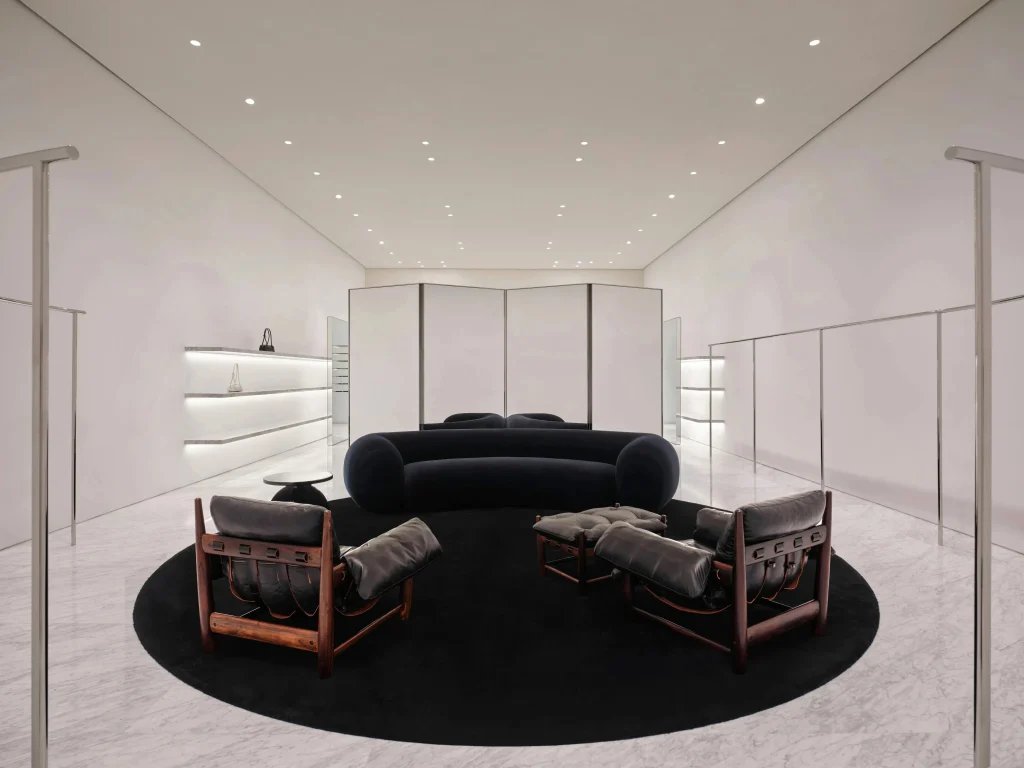
Large marble volumes positioned throughout the store create stronger points of gravity across the interior. Around them, custom-designed sofas and benches by Philippe Malouin establish sculptural weight and visual stability. Meanwhile, armchairs by architect and designer Sergio Rodrigues introduce another layer through tactile forms and softer proportions. Their structured frames and generous cushions create an interesting relationship between strength and softness, a dialogue that also appears repeatedly throughout Alaïa collections themselves.
Furniture choices throughout the store follow a carefully assembled approach deeply connected to Azzedine Alaïa’s own appreciation for collectible design. During his lifetime, exceptional objects frequently shared space alongside fashion, art, and architecture. Interiors reflected personality and curiosity as much as aesthetics. This latest store continues that philosophy naturally.
The opening simultaneously marks another important chapter for Alaïa internationally, expanding the House’s presence across Asia while reinforcing a broader commitment to creating places where architecture and clothing operate according to the same values. Sophistication, warmth, and purity continue defining the Maison’s identity, though the language itself remains remarkably restrained.