Fashion frequently celebrates finished collections, runway moments, and established names. Yet some of the industry’s most important conversations happen long before garments reach catwalks or campaigns. Increasingly, luxury houses invest not only in products but in education, craftsmanship, and the people who will eventually shape fashion’s future. According to recent figures from the Business of Fashion Education Report, more than 68% of fashion students believe craftsmanship and technical specialization will become increasingly important as luxury continues moving toward quality and longevity. Talent still matters. Technique matters equally. And when creativity meets centuries of savoir-faire, where does fashion go next?
That conversation remains central to the 2026 edition of the Loro Piana Knit Design Award. Celebrating its tenth anniversary this year, the annual initiative continues reinforcing the House’s commitment to supporting emerging designers while preserving the knitwear expertise and craftsmanship deeply connected to the Maison’s identity. Presented under the patronage of the Camera Nazionale della Moda Italiana, the award has gradually evolved into one of the industry’s most respected platforms for young international talent.
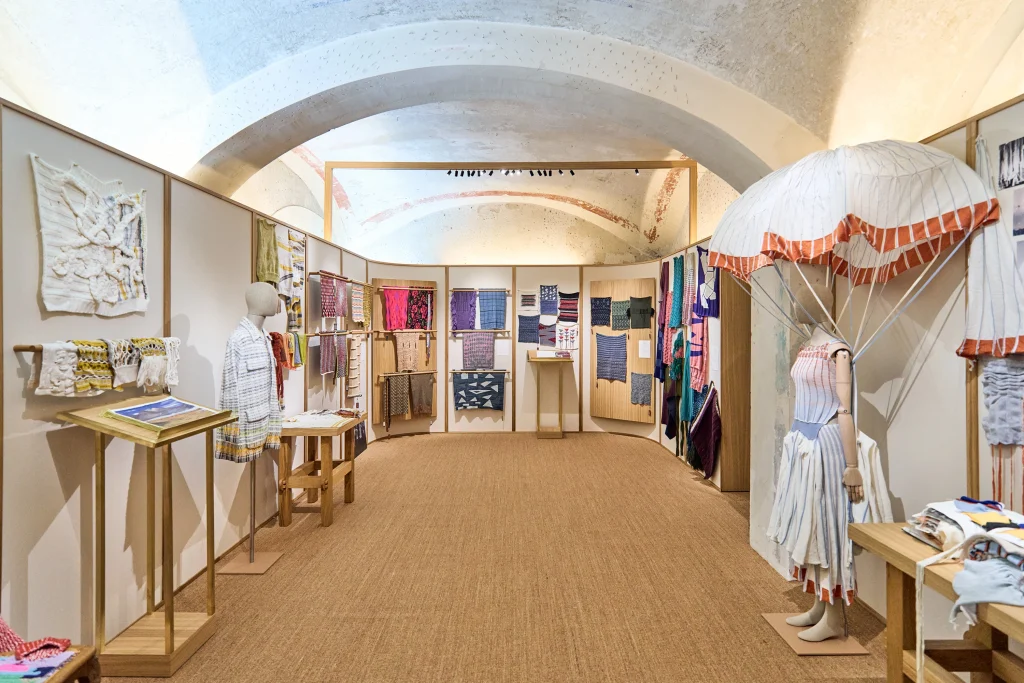
Over the last decade, the scale of the project expanded significantly. What began with three participating institutions has now grown to eight internationally recognized fashion schools, reflecting both the increasing influence of the award and growing interest surrounding knitwear as an area of creative experimentation. The anniversary edition brought together students from Accademia Costume & Moda, Bunka Fashion College, Donghua University, École Duperré Paris, Heriot-Watt University, Parsons School of Design, Shih Chien University, and The Swedish School of Textiles.
The competition invited students to reinterpret iconic Loro Piana yarns while exploring the relationship between heritage and innovation. Participants were encouraged to move beyond technical execution alone and develop ideas capable of combining tradition with entirely new creative approaches. Knitwear itself increasingly occupies a different position in fashion today. No longer confined to functionality, it continues becoming a medium through which structure, movement, and visual experimentation can coexist.
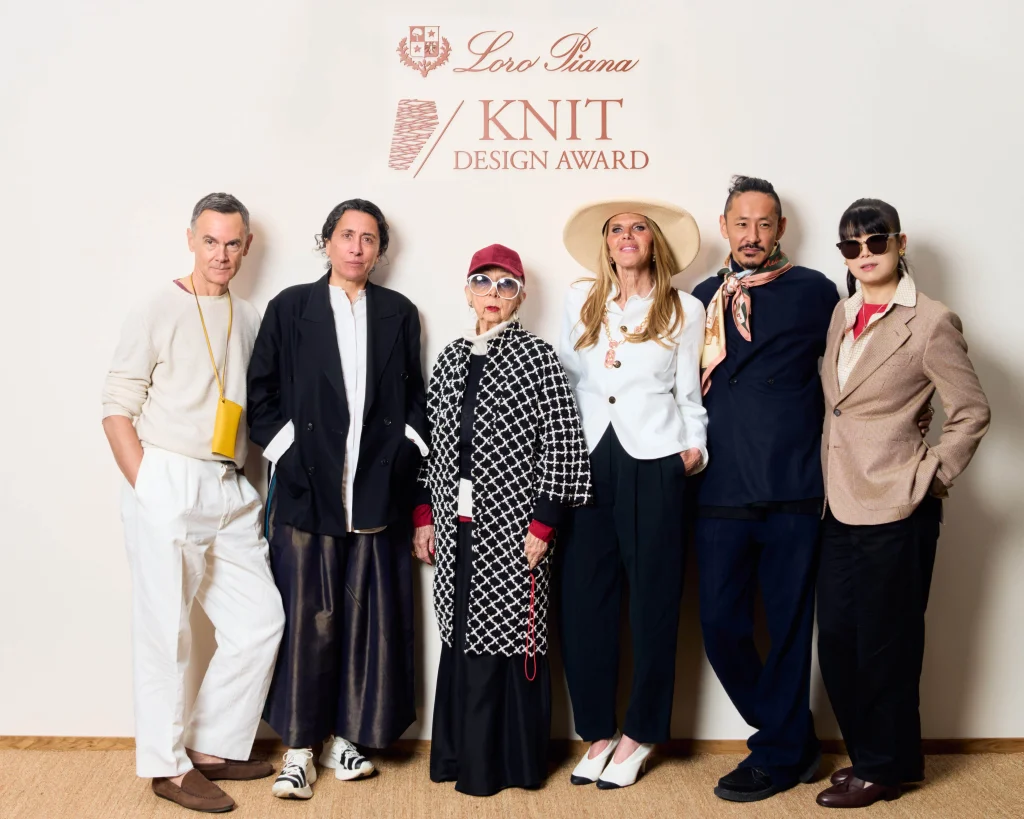
Projects were presented before the jury on May 13 and evaluated by an impressive panel bringing together figures from fashion, design, and creative industries. Loro Piana CEO Frédéric Arnault presided over the jury alongside internationally recognized names including Edward Buchanan, Anna Dello Russo, Sara Maino, Nick Vinson, Leaf Greener, Satoshi Kuwata, and Rossana Orlandi. The selection itself reflected the increasingly interdisciplinary nature of contemporary fashion.
This year’s winning project arrived from Halla Lilja Ármannsdóttir and Viola Schmidt of The Swedish School of Textiles. Their concept, Glitsky – Mother of Pearl, immediately distinguished itself through an unusually poetic approach toward color, movement, and light.
Inspired by iridescent cloud formations, the design explored transformation through knitwear structures capable of changing and shifting visually. Using luxurious cashmere and specialized yarns, the project created surfaces where reflection, texture, and movement continuously interacted with one another. Structure never remained static. Light became part of the design language itself.
What made the project particularly compelling was its emotional quality. Technical mastery remained visible throughout, though the concept moved beyond construction alone. The work felt atmospheric and almost cinematic, transforming knitwear into something capable of responding to movement and changing perception.