The fashion industry spent years expanding far beyond the limits of clothing itself. Runways and collections continue driving attention, yet the broader conversation increasingly includes architecture, cultural spaces, design, interiors, and environments capable of shaping emotion long before a garment enters the picture. Luxury houses today invest heavily in creating complete worlds because audiences increasingly seek experiences carrying a stronger sense of identity and connection. And when physical space begins communicating with the same precision as fashion itself, where exactly does one discipline end and another begin?
Consumer behavior increasingly confirms this shift. Research conducted by the global experience platform Eventbrite found that 78% of millennials prefer spending money on experiences rather than material possessions, a figure that continues influencing how cultural institutions and luxury brands think about engagement, physical environments, and emotional value. The strongest spaces therefore no longer function simply as places people visit. They create atmosphere, memory, and participation.
For Fondation Cartier pour l’art contemporain, this idea has existed at the center of its identity for decades.
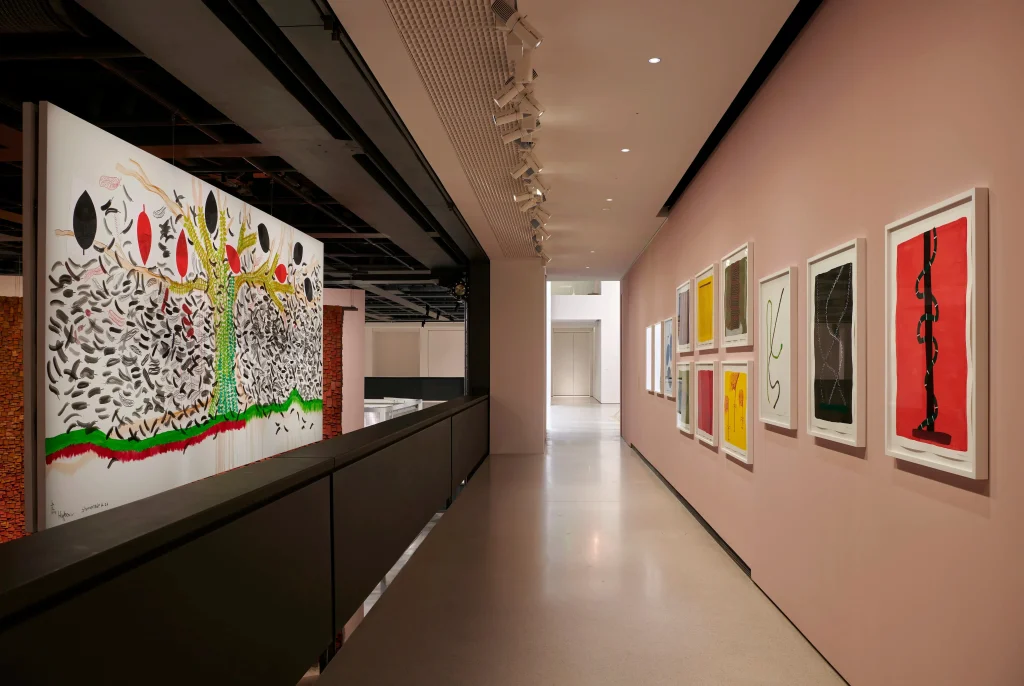
Since its creation in 1984 by Alain Dominique Perrin, then President of Maison Cartier, Fondation Cartier developed according to a very specific vision centered around dialogue, experimentation, and close relationships with artists themselves. From the beginning, the institution resisted conventional boundaries and instead built a multidisciplinary program connecting visual arts, photography, architecture, film, science, performance, design, and contemporary cultural questions through one continuous conversation.
Over time, the institution established an international program that expanded significantly beyond traditional exhibition models. Rather than functioning as a place built solely around display, Fondation Cartier gradually developed into an environment dedicated to exchange and interaction. Through debates, talks, performances, encounters, and collaborations, it repeatedly created spaces where artistic practice and public participation moved closer together.
Its collection itself reflects this approach. Built over decades and shaped through direct engagement with contemporary questions and social themes, the Fondation developed a body of work reflecting multiple perspectives and different forms of creative thinking. Accessibility always remained central. Artistic dialogue was never conceived as something reserved for specialists alone but as a space intended to remain open and active across different communities.
That philosophy now enters a significant new chapter. Fondation Cartier opened its new Paris location at 2 Place du Palais-Royal, directly opposite the Louvre and positioned at one of the city’s most historically charged addresses. The move immediately creates a dialogue between different periods of Parisian culture and artistic history, placing the institution within an area deeply connected to the city’s creative identity. Inside the Haussmannian building dating back to 1855, architect Jean Nouvel completely reimagined the interior according to principles long associated with both his own architectural thinking and Fondation Cartier’s broader mission.
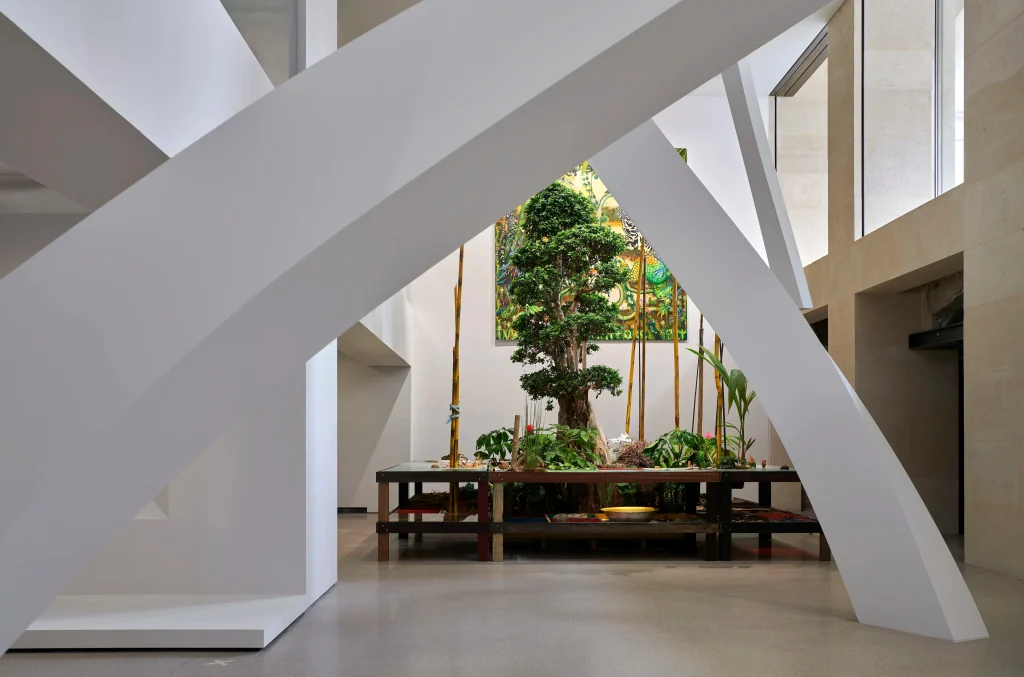
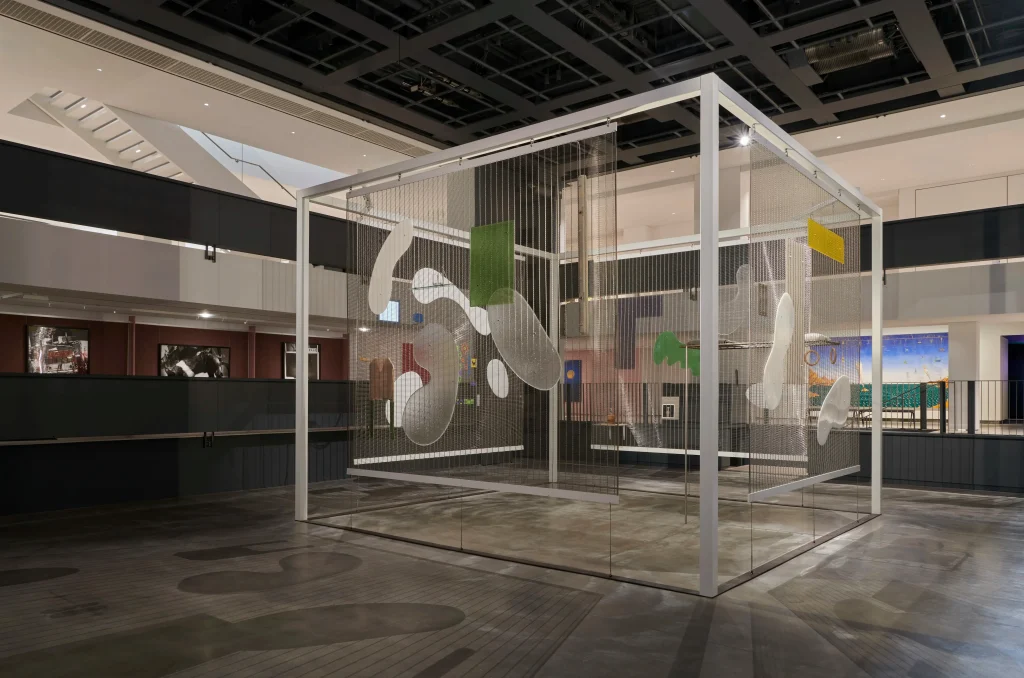
The structure itself behaves less like a traditional exhibition venue and more like an adaptable system capable of changing continuously. Five platforms adjustable across eleven different heights allow countless spatial possibilities through changing volumes, perspectives, circulation paths, and relationships with light. Each exhibition therefore gains the ability to reshape the building itself according to its own needs.
Across 8,500 square metres accessible to the public, including 6,500 square metres dedicated to exhibitions, architecture begins functioning as an active participant inside the experience. Visual arts, photography, cinema, live performance, science, design, and craftsmanship share the same environment while spaces themselves continuously shift according to artistic direction. Jean Nouvel’s approach also establishes a stronger relationship between the institution and Paris itself. Large bay windows along the ground floor create direct visual connections with the city outside while preserving dialogue with the surrounding architecture of Rue de Rivoli. The building maintains a relationship with its surroundings instead of separating itself from them.
Additional initiatives further strengthen the institution’s broader cultural role. La Manufacture, a new 300-square-metre educational space opening in Spring 2026, places craftsmanship and learning through physical creation at the center of workshops and programming for visitors of all ages. At the same time, a new auditorium introduces performances, concerts, discussions, and artistic exchanges extending conversations beyond exhibitions themselves.
A redesigned bookstore further reinforces this multidisciplinary approach through publications, artist collaborations, and broader cultural material connected directly to Fondation Cartier’s ongoing work.
Credits:
© Martin Argyroglo
© Fabrice Hyber / Adagp, Paris, 2025 © Sheroanawe Hakihiiwe, Sans titre, 2023 / © Sheroanawe Hakihiiwe, Hii hihama oru keki tuo (Culebra subiendo un arbol), 2023
© JUNYA.ISHIGAMI+ASSOCIATES, Sydney Cloud Arch, 2018 © Luiz Zerbini, Natureza Espiritual da Realidade (détail), 2012
© Andrea Branzi / Adagp, Paris, 2025, Gazebo, 2008
Photos © Marc Domage