Entertainment has increasingly moved beyond traditional formats, transforming architecture, technology and public space into stages for entirely new forms of artistic expression.
According to the latest Global Entertainment & Media Outlook by PwC, the global live entertainment sector is expected to exceed $68 billion in revenue by 2028, reflecting a growing demand for immersive experiences that combine visual spectacle, performance and cultural engagement. When audiences no longer seek only a show but an experience capable of transforming the space around them, can architecture itself become part of the performance?
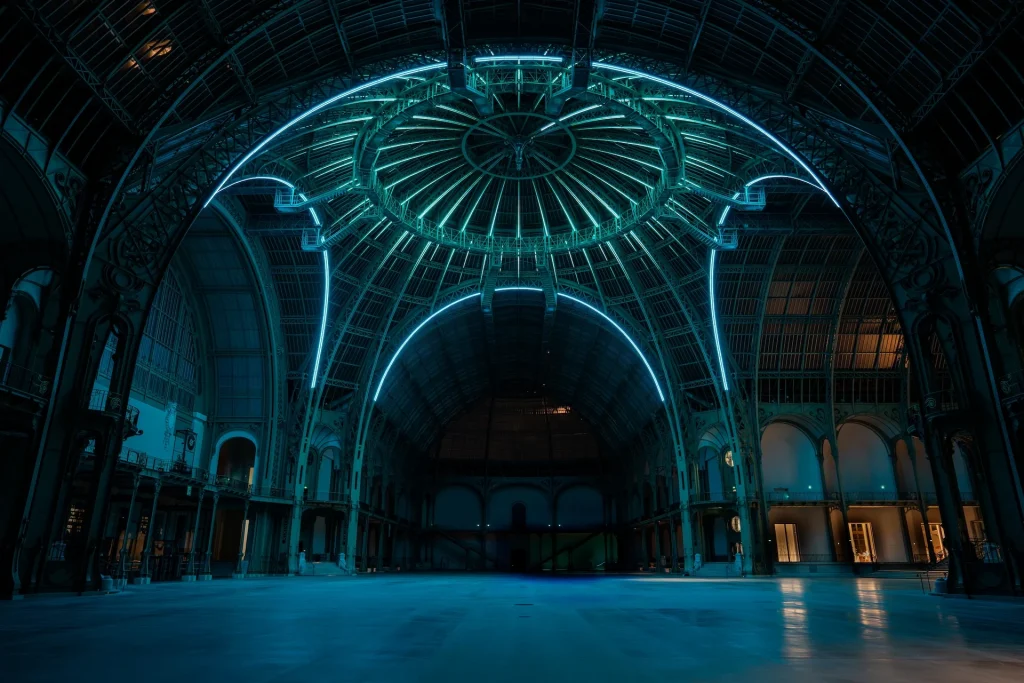
This summer in Paris, the answer arrives in the form of Ciels, a monumental light installation created by Visual System for the Nef of the Grand Palais. Conceived as a permanent artistic intervention that evolves alongside the building’s programming, Ciels transforms one of France’s most celebrated landmarks into a living canvas where light, colour and architecture engage in a continuous dialogue. More than a visual spectacle, it represents a new chapter in the relationship between entertainment, public space and contemporary art.
The installation was first revealed during the live performance Moon Air Symphonique by the French electronic duo Air during the inaugural edition of Collector last December. Its appearance immediately drew attention to the extraordinary possibilities offered by the newly restored Grand Palais. Now, as part of the second edition of Grand Palais d’été, Ciels returns each evening to conclude the season’s performances before continuing throughout the After Nef programme, where concerts, DJ sets and musical gatherings extend the energy of the night beneath the iconic glass roof.
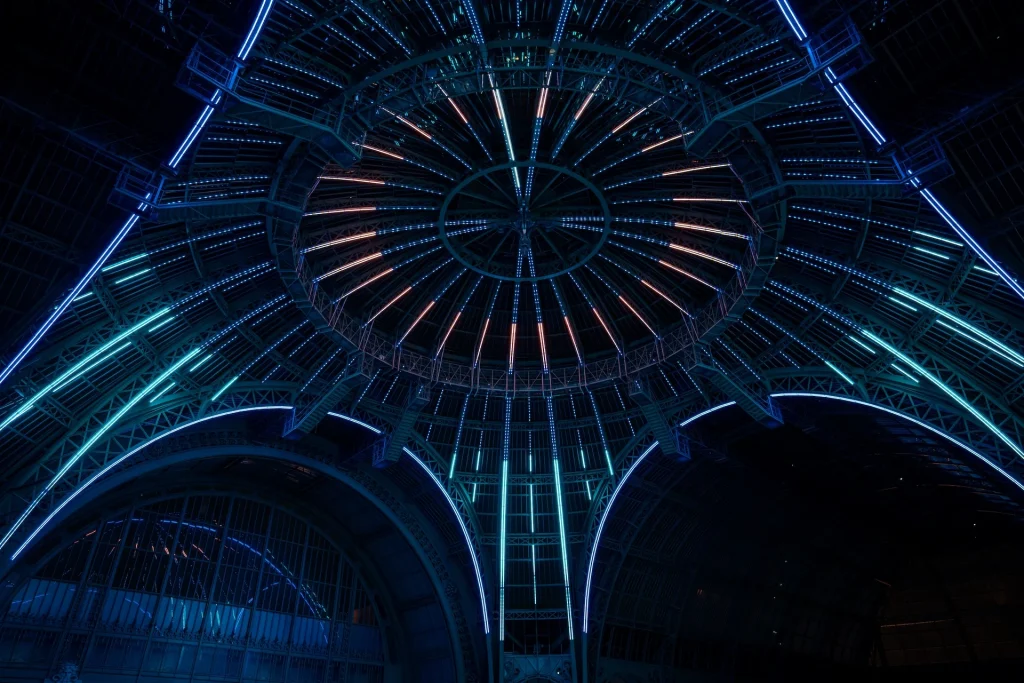
Created by Pierre Gufflet, Julien Guinard, Ambroise Mouline and Valère Terrier of Visual System, Ciels was imagined specifically for the unique dimensions and architectural character of the Grand Palais. The work unfolds through constantly shifting compositions of light and colour that never repeat themselves. Like the sky that inspired its title, the installation remains in perpetual transformation. Shapes emerge and dissolve, colours evolve, perspectives shift and new visual landscapes appear as visitors move through the space. Every evening offers a different encounter with the work.
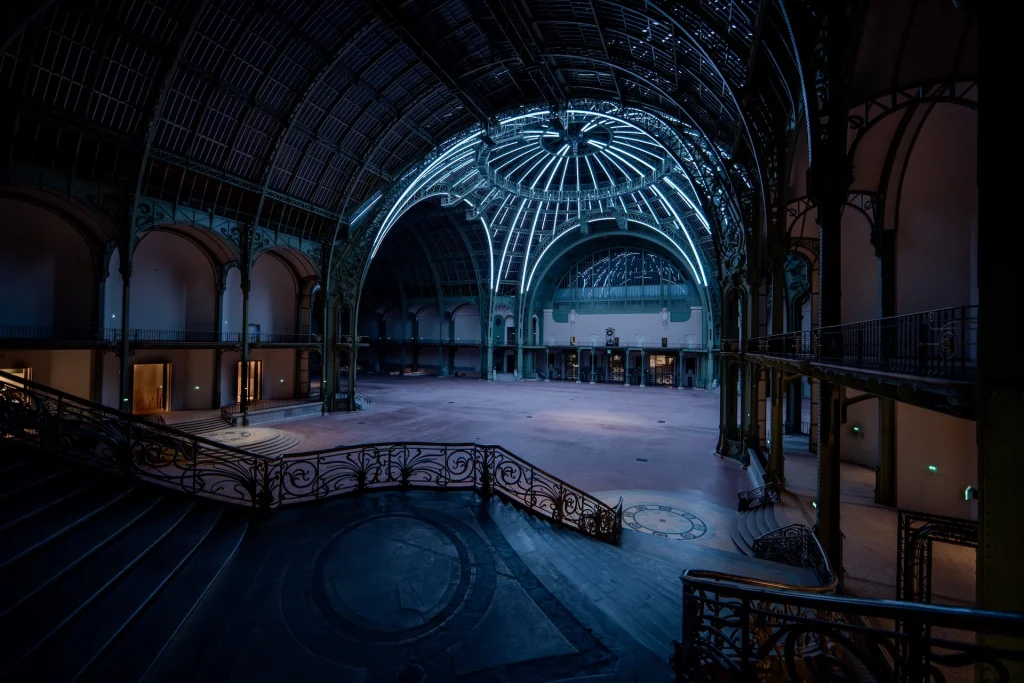
What distinguishes Ciels from many contemporary light installations is its relationship with architecture. Rather than imposing itself upon the building, the work reveals the building itself. The immense glass canopy, the elegant steel framework, the curves of the structure and the changing natural light all become active participants within the artwork. Light traces the geometry of the Nef, accentuating architectural details while preserving the monumentality that has defined the Grand Palais for more than a century. The result is an experience that feels simultaneously contemporary and deeply connected to the identity of the historic building.
The project emerged from an international competition and was selected by a committee of twelve experts before being produced by GrandPalaisRmn with the support of the Fondation ENGIE. Its selection reflects a broader evolution in contemporary cultural programming, where audiences increasingly seek experiences capable of engaging multiple senses at once. The installation functions as a work of art, an architectural intervention and a public gathering point, blurring the boundaries between these categories.
Yet Ciels also carries a deeper historical dimension. The Grand Palais was originally constructed for the Exposition Universelle of 1900, while another landmark closely associated with Visual System’s artistic journey, the Atomium in Brussels, was built for the World’s Fair of 1958. Ten years before illuminating the dome of the Grand Palais, Visual System had already transformed the spheres of the Atomium through a series of ambitious artistic interventions. The connection between these two projects extends far beyond architecture. Both monuments emerged from moments in history when societies sought to express optimism about the future and confidence in the power of scientific and technological progress.
The Grand Palais and the Atomium stand as physical manifestations of a particular vision of universality. Constructed from steel, glass and engineering innovation, they were designed to celebrate humanity’s collective achievements and aspirations. In many ways, Visual System continues this tradition through its own artistic language. The collective embraces contemporary technologies including advanced LED systems, programming and digital design, transforming them into tools for artistic exploration rather than merely technical instruments. Their work demonstrates how innovation can serve creativity while remaining accessible to broad audiences.
Visual System describes itself as a product of this long history linking science and artistic creation. “We are the children of Edison,” the collective has stated, acknowledging the generations of discoveries that made contemporary light-based art possible. From the emergence of electroacoustic experimentation during the twentieth century to the development of sophisticated electro-optical technologies in the twenty-first, the relationship between artistic expression and scientific innovation has continually evolved. According to the artists, their work represents an unconscious continuation of that progress, extending a dialogue that has existed for more than a century.
This philosophy is explored in greater depth through Ars Universalis — Towards a New Universal Art, a research publication accompanying Ciels. The text examines how Visual System approaches light as a medium capable of transcending cultural, linguistic and geographical boundaries. Through immersive environments that combine architecture, technology and sensory perception, the collective proposes a contemporary form of total art in which multiple disciplines converge into a unified experience. Visitors will also have the opportunity to discover the creative process behind the installation through a documentary directed by filmmaker Louis Wallecan. Produced during the development of Ciels, the film offers a rare behind-the-scenes perspective on the conception, technical challenges and artistic ambitions that shaped the project.
The arrival of Ciels coincides with the launch of the second edition of Grand Palais d’été, which transforms the Nef into one of Paris’s most dynamic cultural destinations from June through the height of summer. Theatre, dance, concerts, multidisciplinary performances and large-scale artistic interventions bring together French and international creators across a programme designed specifically for the monumental scale of the venue. Following selected performances, the After Nef programme continues beneath the illuminated glass canopy, creating a festive atmosphere where audiences remain long after the final curtain.
Within this ambitious cultural landscape, Ciels becomes more than an installation. It acts as a connective thread running through the entire season. Every performance, every concert and every gathering ultimately unfolds beneath the same evolving sky of light. Visible from within the building and radiating beyond its walls into the Parisian night, the work reinforces the visual presence of the Grand Palais within the urban landscape while inviting visitors to rediscover one of the city’s most iconic monuments from an entirely new perspective.
As entertainment continues to evolve beyond conventional formats, projects such as Ciels demonstrate how art, architecture and technology can converge to create experiences that are both collective and deeply personal. Beneath the vast glass canopy of the Grand Palais, light becomes performance, architecture becomes stage and the sky itself becomes part of the story.