There’s a curious shift happening in how people dress, a quiet turning towards things that feel real, made for a purpose. Among these things, the fisherman sweater stands out, making a significant comeback. This isn’t merely about a warm top for cool weather; it’s about a deeper appreciation for items that carry a story, that were built to last, and that somehow speak to a desire for authenticity in an often fast-paced world. The current popularity of this sturdy garment, with its distinctive cable knit sweater style, points to something more substantial than just a passing fashion whim.
For a long time, clothing trends often chased the new, the flashy, the overtly luxurious. But now, we observe a growing fascination with items that began their lives far from the catwalk – items like the fisherman sweater, which once kept working people warm against harsh elements. This article will look into the reasons behind this interesting return, connecting it to modern ideas about precise design, a hint of playful irony, and the power of memory. We’ll even consider the approach of designers like Miuccia Prada, who has a knack for showing how ordinary things can become truly meaningful style choices.
To understand the fisherman sweater trend today, it helps to look back at where it came from. Picture the coastal communities of Ireland, Scotland, or the Channel Islands. Here, the North Atlantic winds whip across the sea, bringing cold and damp conditions. Fishermen needed clothing that could stand up to this challenge, something more than just a simple wool shirt. They needed protection, warmth, and resilience.
This need gave rise to the original fisherman’s sweater. Each community, sometimes even each family, had its own specific patterns, passed down through generations. These weren’t just decorative; they often had practical purposes. The intricate cable knit sweater style, for instance, wasn’t just pretty; the raised stitches created pockets of air, providing extra insulation. Other patterns, like diamonds or moss stitches, were also thought to offer additional warmth or even represent good luck and prosperity at sea. Made from thick, natural wool, often un-dyed, these sweaters were incredibly dense, sometimes even water-resistant thanks to the natural lanolin in the sheep’s wool. They were, in every sense, a piece of practical clothing appeal, designed for survival and hard work.
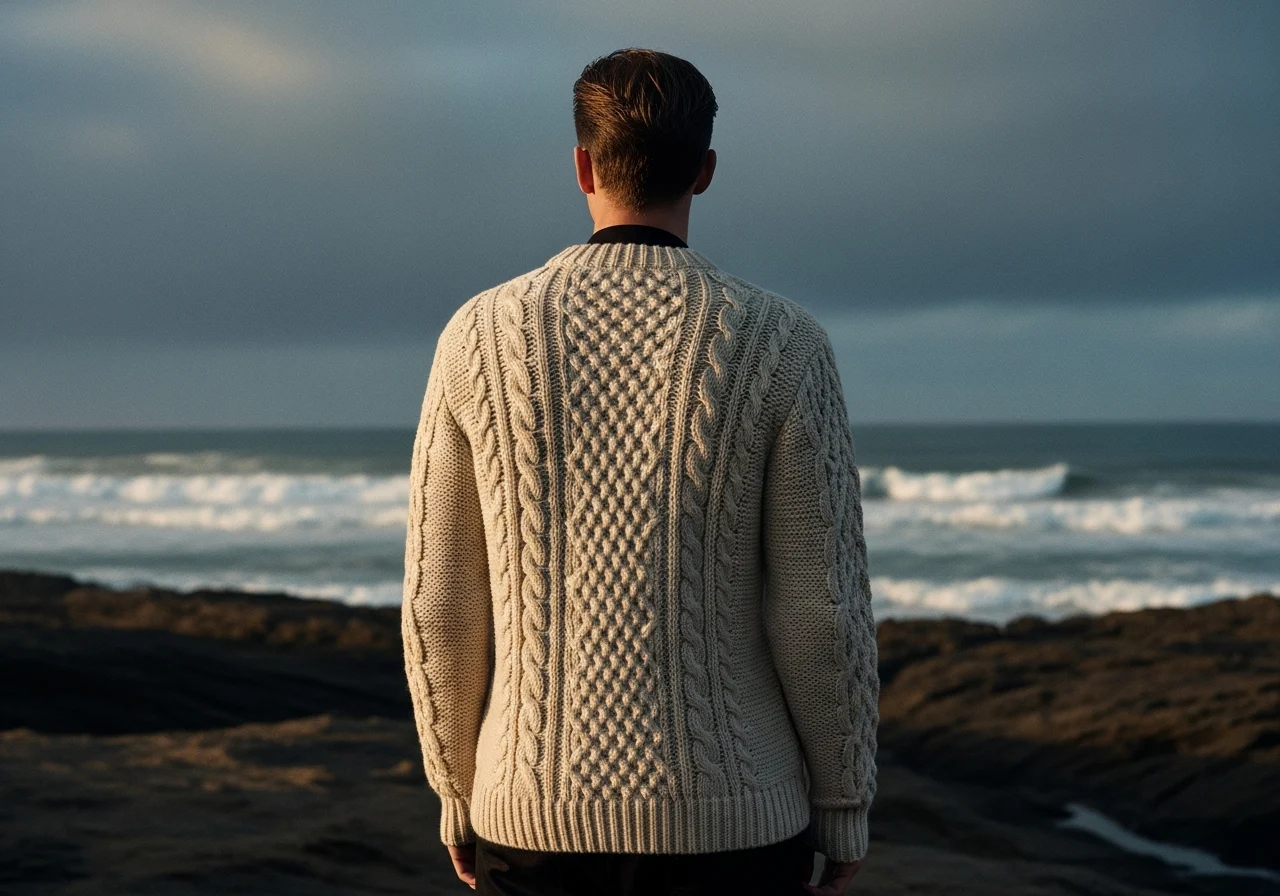
The journey of the fisherman sweater from a purely functional item to a wardrobe favorite is a fascinating one. For decades, it remained largely within its working context. But as fashion began to draw inspiration from everyday life and authentic craftsmanship, the sweater’s inherent qualities started to gain notice. Its rugged charm, its honest construction, and its clear connection to a life lived close to nature began to resonate with people seeking something different.
By the mid-20th century, the fisherman sweater began appearing in more casual settings, adopted by academics, artists, and those who appreciated its understated quality. It offered a comfortable, reliable alternative to more formal wear, suggesting a certain down-to-earth sensibility. This slow but steady move from the docks to the city streets laid the groundwork for its current wide acceptance, demonstrating that truly good design, born of necessity, can transcend its original purpose.
The rise of the fisherman sweater is closely linked to the broader phenomenon of coastal aesthetic fashion. This style direction isn’t just about dressing for the beach; it’s about evoking a certain feeling, a way of life connected to the sea. Think of peaceful mornings, the sound of waves, the smell of salty air, and comfortable, durable clothes that can handle the elements. The fisherman sweater fits into this picture perfectly.
It suggests a life of simple pleasures, an appreciation for natural beauty, and a connection to tradition. This style often favors natural materials, muted colors, and items that feel lived-in and authentic. The sweater, with its textured wool and heritage patterns, becomes a central piece in creating this look. It speaks to a desire for calm, for a break from urban intensity, and for clothes that feel both comforting and strong. It’s about more than just looking good; it’s about feeling a certain way, carrying a sense of quiet strength and connection to something enduring.
The current popularity of the fisherman sweater, and indeed other forms of practical clothing appeal, tells us something important about our present preferences. It’s not just about comfort; it’s about a deeper attraction to items that are well-made and serve a clear function. This shift reflects a move towards valuing precision, a bit of subtle humor, and the power of memory in our clothing choices.
To truly understand how ordinary items gain status as thoughtful style choices, we can look to designers like Miuccia Prada. Her work consistently demonstrates how utility and familiar objects can be re-evaluated and given new meaning in the fashion world. Prada has a distinctive way of taking things that are considered common or even plain – think of nylon, uniforms, or simple cotton – and presenting them in a way that makes you see them differently. She adds a layer of intellectual curiosity, a quiet subversion, that transforms the ordinary into something profound.
For Prada, the beauty often lies in the unexpected, in finding grace in the practical. She doesn’t just decorate; she questions. Her approach with the fisherman sweater, or similar workwear items, would involve highlighting its inherent strength and honesty. She might pair it with something surprising – a delicate skirt, a sharp tailored pant – to create a contrast that makes both items more interesting. This kind of styling isn’t about making a loud statement; it’s about careful consideration, about showing that true style comes from understanding and reinterpreting the world around us. Her work shows that an item’s worth isn’t solely in its luxury materials or intricate embellishments, but in its concept, its history, and its potential for new interpretations. The fisherman sweater trend, in a way, mirrors this philosophy, suggesting that deep value can be found in the sturdy and the true.
Today, the fisherman sweater is worn in countless ways, proving its adaptability. It pairs just as well with denim for a relaxed weekend look as it does with tailored trousers or a flowing dress for a more considered outfit. Designers offer variations in weight, yarn, and color, but the core elements of the cable knit sweater style and its robust character generally remain.
Its current popularity is a sign of a broader change in how we think about clothes. People are looking for items that offer substance, longevity, and a connection to something real. They want clothing that feels good, performs well, and tells a story. The practical clothing appeal of the fisherman sweater, combined with its cultural resonance and its ability to fit into a coastal aesthetic fashion, makes it a powerful choice for those who value authenticity and thoughtful dressing.
The enduring presence of the fisherman sweater in our wardrobes goes beyond simple seasonal popularity. It represents a deeper appreciation for garments that are crafted with care, that have a history, and that offer genuine utility. From its humble beginnings on rough seas to its current status as a style icon, this sweater shows how items born of necessity can become symbols of enduring quality and considered taste.
The fisherman sweater trend is more than just a passing moment in fashion; it’s a reflection of changing values. It highlights a desire for clothes that are authentic, well-made, and capable of telling a story. It’s a testament to the idea that true style often comes from understanding the past, appreciating precise making, and finding quiet meaning in the things we choose to wear every day.