Powerful women increasingly changed the definition of success over recent years. Leadership today rarely follows one recognizable formula, and influence no longer depends solely on visibility, volume, or occupying the center of every conversation. Some of the most compelling female figures built careers through consistency, perspective, and long-term vision, creating influence that developed gradually and remained durable. Public culture often rewards immediacy. Real authority tends to arrive more slowly.
Rosie Huntington-Whiteley belongs naturally to that shift because her trajectory never followed the predictable path frequently expected from fashion models. For years, she occupied one of the industry’s most visible spaces, appearing on international magazine covers, fronting luxury campaigns, walking major runways, and establishing herself among fashion’s most recognizable names. Yet her career gradually moved far beyond modeling itself. Visibility created the foundation, though over time she built something considerably more substantial around it.
Part of Rosie’s appeal comes from a quality increasingly rare inside contemporary culture: continuity. Fashion frequently rewards reinvention and constant transformation. Trends change, aesthetics evolve, and public attention regularly moves toward whatever appears newest. Rosie developed another kind of relationship with visibility. Instead of repeatedly changing direction, she built a highly recognizable visual and professional identity that remained remarkably coherent over time.
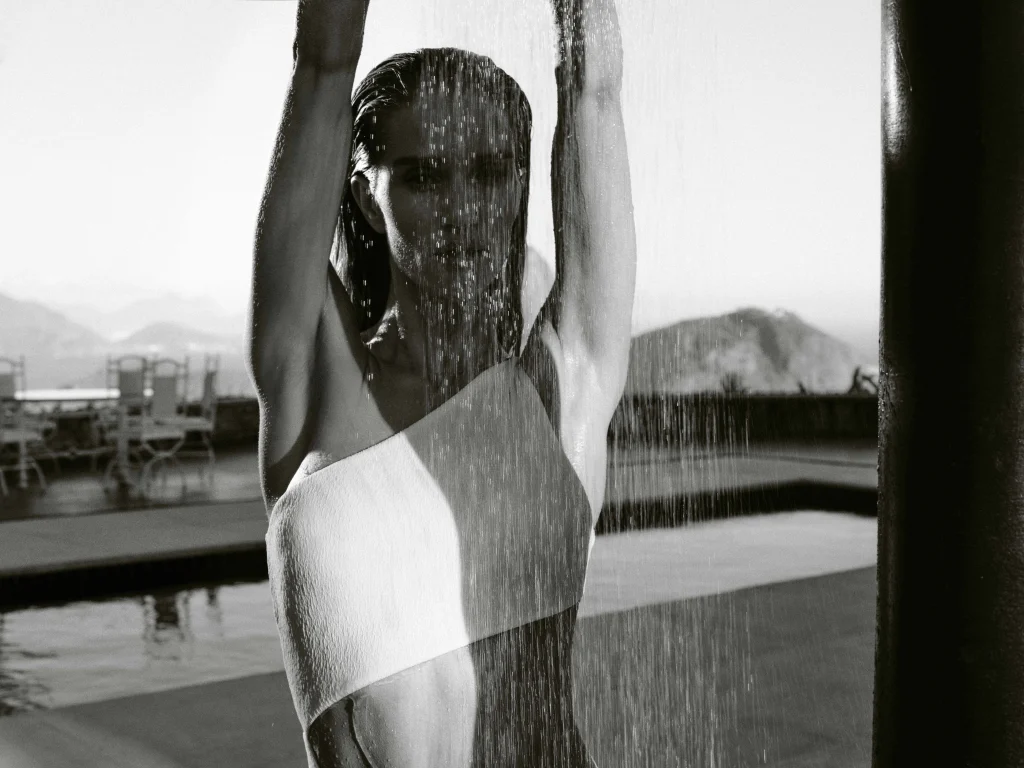
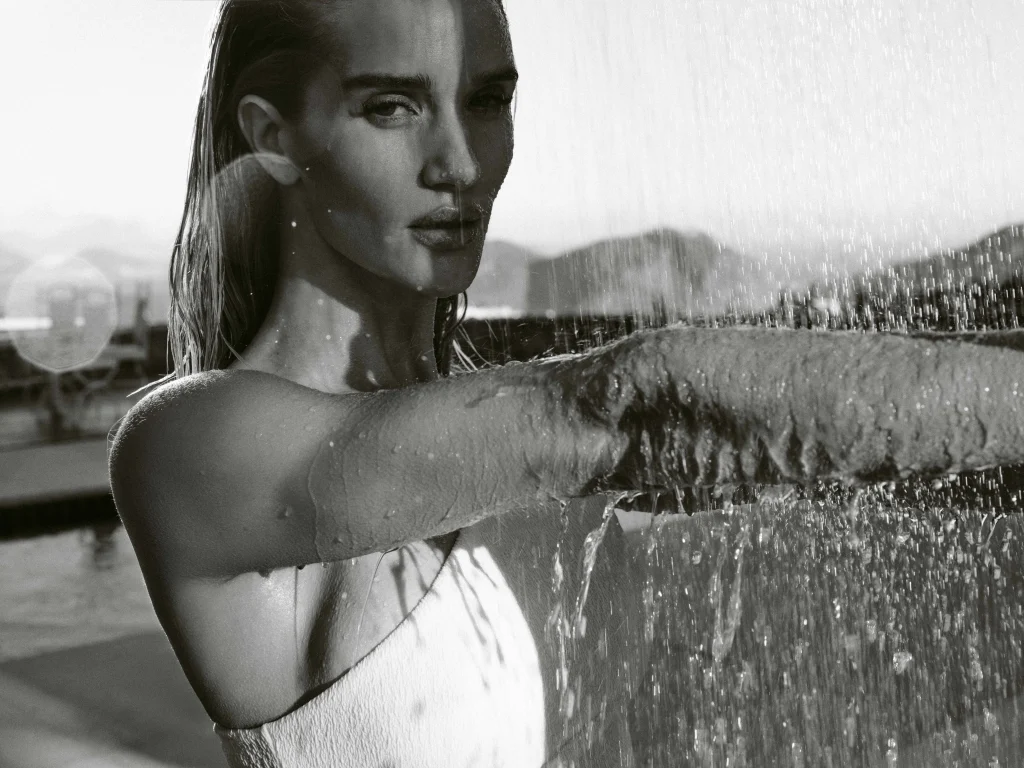
The aesthetic itself became instantly associated with her name. Clean tailoring, neutral palettes, restrained glamour, and silhouettes defined by precision and simplicity gradually evolved into something larger than personal style. They became part of her broader cultural language. Women increasingly looked toward Rosie not simply because of individual outfits or campaigns, but because of the consistency surrounding her choices. Her image always felt intentional without appearing overworked, elegant without relying on excess, and contemporary without chasing momentary trends.
That visual discipline eventually translated into business itself.
Over time, Rosie expanded her presence beyond fashion and entered the beauty industry through Rose Inc., transforming years of industry knowledge into a platform connecting editorial storytelling, skincare, and cosmetics. The move felt remarkably natural because it reflected something developed over decades rather than a sudden entrepreneurial pivot. Years spent working with photographers, makeup artists, designers, stylists, and luxury houses had gradually created another kind of expertise. The audience understood this instinctively. They recognized that her authority came not from celebrity alone but from accumulated experience.
This distinction increasingly shapes modern founder culture. Consumers today rarely respond to visibility alone. They seek credibility, perspective, and authenticity. Increasingly, audiences ask not only who promotes a product but who truly understands it. Rosie benefited from years of audience trust because her evolution never appeared disconnected from her own story. Her relationship with media also followed a highly controlled rhythm. Unlike public figures built around constant exposure, Rosie cultivated visibility selectively. Interviews, appearances, campaigns, and social platforms consistently reflected a similar perspective and aesthetic discipline. She developed influence through clarity rather than frequency. The audience understood what she represented and, perhaps more importantly, what she did not.
Over time, that approach expanded her role beyond fashion entirely. Rosie increasingly became associated with a broader lifestyle conversation surrounding beauty, travel, interiors, wellness, and modern femininity. Her influence gradually moved from clothing toward aspiration itself. Women followed her not simply to see what she wore but to understand the world she created around herself. That progression says something larger about changing ideas surrounding female leadership. Increasingly, women admire figures who create systems, businesses, and perspectives rather than simply occupying visible positions. Ownership developed new meaning. Authority became connected with authorship.
Rosie’s career repeatedly reflects that evolution. Fashion informed beauty. Beauty informed entrepreneurship. Personal identity connected all of it. Each chapter felt like a continuation rather than a departure.
Rosie Huntington-Whiteley was recently announced as Designer and Global Ambassador for ViX Paula Hermanny, the Brazilian luxury swim and resortwear house. The partnership immediately distinguished itself because Rosie entered not merely as the face of a campaign but as an active creative participant. Working directly alongside founder Paula Hermanny, she co-designed three collections bringing together swimwear and ready-to-wear pieces shaped by a shared vision surrounding travel, femininity, and craftsmanship.
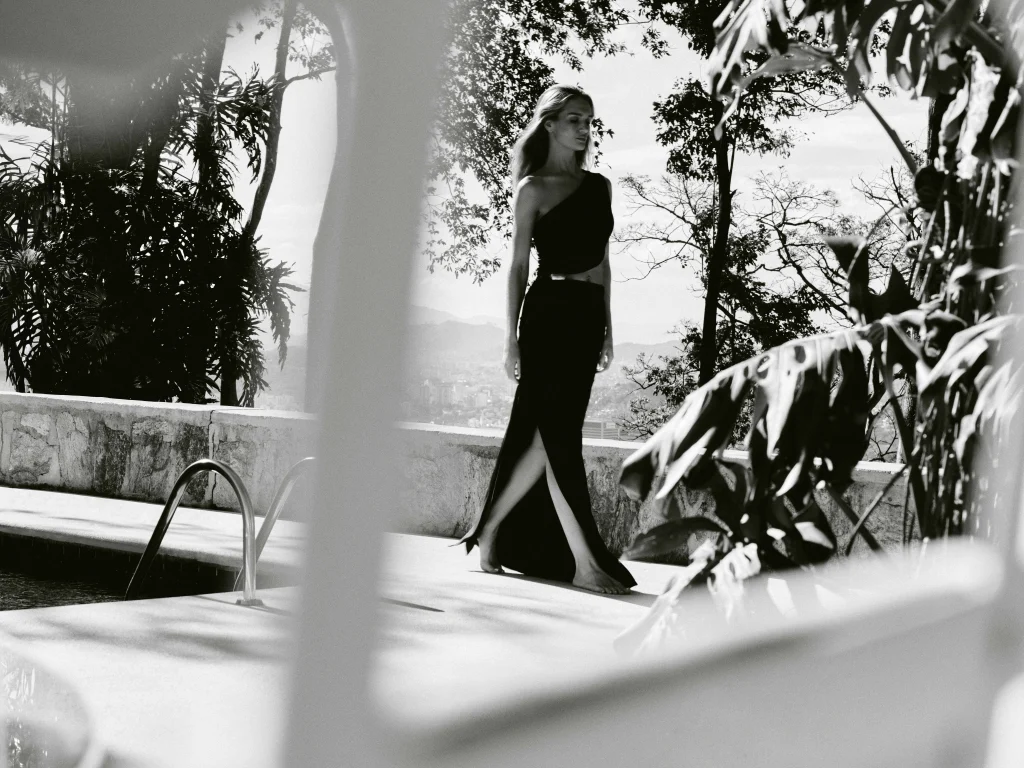
The debut collection reflects many qualities already associated with Rosie herself. Inspired by Brazil’s landscapes and natural tones, the designs move through a restrained palette built around clean lines and subtle sensuality. Neutral silks, elongated proportions, carefully placed slits, and swimwear accented with gold hardware create pieces designed for movement between destinations and moments. Paula Hermanny described the collaboration as intuitive, emphasizing Rosie’s understanding of how women want clothing to feel: confident, sophisticated, and entirely themselves.
The partnership ultimately feels less like a campaign and more like a continuation of a story already unfolding. Because Rosie Huntington-Whiteley increasingly represents a model of modern female leadership built not through constant reinvention, but through evolution — allowing influence, identity, and business to grow together with unusual consistency.