Celebrity culture once operated according to a relatively simple formula. Famous faces promoted campaigns, appeared in advertisements, fronted beauty launches, and temporarily lent their visibility to products created elsewhere. Influence was measured through recognition and reach. The relationship worked for years because audiences largely accepted aspiration as strategy. Today, that structure feels increasingly outdated. Visibility still matters, though audiences now expect something deeper: perspective, credibility, and genuine involvement. The modern consumer rarely asks only who is attached to a brand. Increasingly, the question became far more direct: who built it?
That shift transformed celebrity culture into something considerably more complex. Ownership gradually replaced endorsement as one of the strongest forms of modern influence, particularly among women who increasingly moved from campaign faces into founders, creative directors, and decision-makers. The beauty industry itself reflects that change. The global beauty market surpassed $440 billion and continues expanding rapidly, driven largely by founder-led businesses and direct audience communities that rely heavily on emotional connection and identity. Products remain important, though increasingly consumers buy into people, values, and narratives surrounding those products.
Few names altered that conversation as dramatically as Rihanna. When Fenty Beauty launched in 2017, it entered a market already saturated with celebrity-backed beauty projects. On paper, there was little reason to expect another cosmetics launch would fundamentally change industry standards. Yet almost immediately, Fenty introduced a different approach. Rather than presenting beauty through exclusivity or distance, Rihanna built the brand around recognition. Consumers who previously struggled to find products matching their skin tones suddenly found themselves placed at the center of the conversation rather than at its margins. The launch generated immediate industry reaction and altered expectations surrounding representation almost overnight.
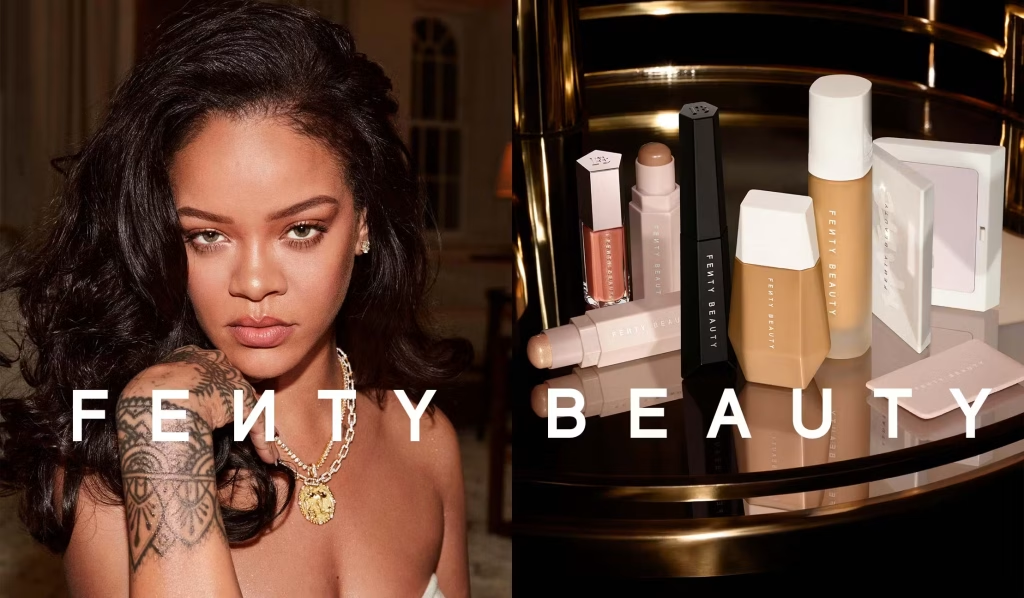
The significance of Fenty extended well beyond foundation shades alone. Rihanna understood something many brands had repeatedly overlooked: inclusivity operates emotionally as much as visually. Consumers increasingly respond to brands capable of creating a sense of belonging. They want recognition, familiarity, and trust. Emotional alignment became one of the most powerful currencies in modern business.
That principle increasingly defines founder culture itself. Tracee Ellis Ross approached Pattern Beauty from a highly personal direction. Instead of creating broad beauty products designed for everyone and no one simultaneously, she focused specifically on textured hair communities frequently underserved by mainstream categories. The credibility surrounding Pattern arrived naturally because consumers understood the origin of the project. The brand emerged from lived experience rather than market calculation.
Huda Kattan developed another model entirely. Beginning as a beauty blogger and content creator, she built audience trust long before launching products. Followers became familiar with her voice, expertise, preferences, and personality before Huda Beauty entered the market. That sequence proved increasingly important. Modern audiences often trust founders they feel they already know.
Gwyneth Paltrow followed another route through Goop, creating something extending beyond products and entering larger conversations surrounding wellness and lifestyle. Whether celebrated or debated, Goop demonstrated another reality of founder culture: audiences increasingly connect with worldviews as much as merchandise itself.
That change introduced a different expectation surrounding celebrity businesses. Visibility alone no longer guarantees loyalty. Audiences increasingly look for credibility, consistency, and intention. Founder culture transformed the relationship between public figures and consumers because ownership created accountability. The founder no longer appears beside the product. The founder becomes part of the product’s identity.
Rihanna perhaps understood this earlier than many others. Her influence expanded far beyond beauty and entered fashion, business, and luxury itself. She became the first woman and first woman of color to lead an original luxury house under LVMH, a milestone that represented far more than corporate recognition. It reflected a larger shift taking place throughout fashion and business. Women increasingly sought control over vision, structure, and narrative rather than participation alone. That same idea continues appearing throughout her public presence.
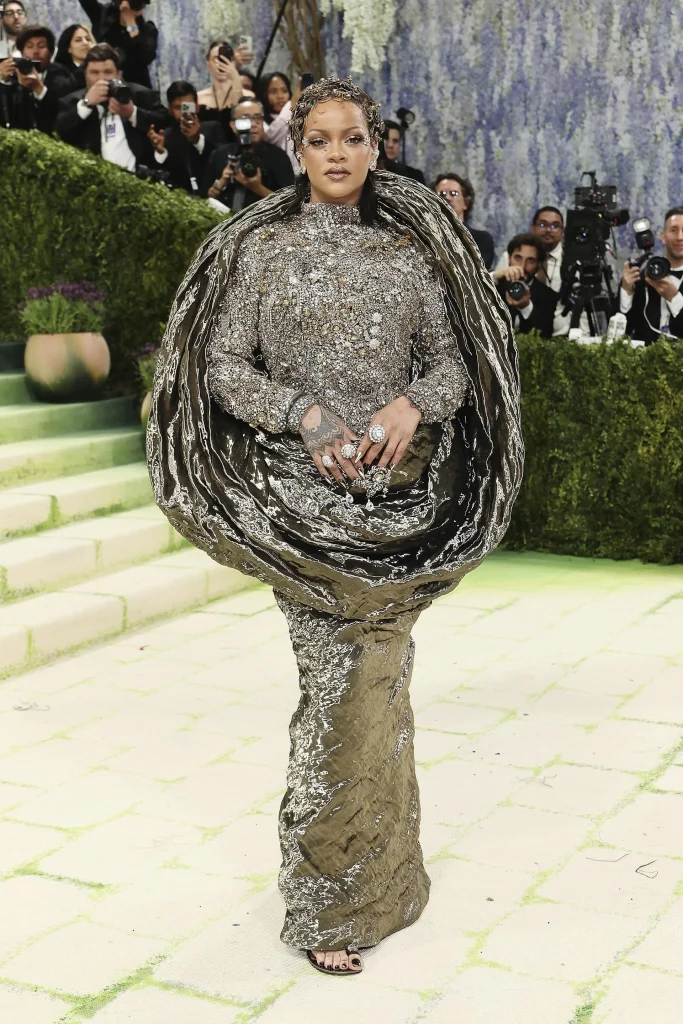
At the Met Gala 2026, Rihanna arrived wearing custom Maison Margiela in a look that immediately extended conversations surrounding craftsmanship and artistic construction. Drawn from the Artisanal 2025 collection, the draped silhouette referenced medieval Flemish architecture and visual traditions associated with Flemish painting. Constructed from duchesse fabric woven with fine recycled metal threads typically reserved for computer wiring, the gown reflected Maison Margiela’s ongoing fascination with unexpected materiality. Sculpted entirely by hand, it framed a corseted bodice covered with more than 115,000 crystal beads, antique jewels, and intricate chains, while embroidery alone required 1,380 hours of work.