Football has long evolved into something much larger than sport. Today it exists as entertainment, culture, emotion, celebrity influence, and global community operating simultaneously on a scale very few industries can rival. According to UEFA audience figures, its competitions reach billions of viewers worldwide across every season, turning major finals into international moments extending far beyond the stadium itself. Cities change during these events. Airports fill with supporters, restaurants become temporary meeting places, and conversations suddenly revolve around predictions, rituals, and hope. For a few hours, football creates its own universe.
This year, Istanbul became the center of that universe. The UEFA Europa League final arrived carrying months of anticipation, while supporters from across Europe traveled with expectations built over an entire season. Finals possess a rhythm entirely different from ordinary matches because tension begins long before the first whistle. Hours before kick-off, the atmosphere surrounding the city had already transformed. Streets filled with club colors, songs echoed through public squares, and supporters carried the particular energy only football seems capable of creating. Some events are watched. Others are felt.
The evening ultimately delivered the kind of story football repeatedly writes better than any screenwriter could imagine. Aston Villa defeated SC Freiburg and secured its first European trophy since 1982, ending more than four decades of waiting. For supporters, the result represented far more than silverware or statistics. Entire generations had grown up without seeing the club lift a European title. Parents had spoken about earlier victories to children. Memories traveled through families long before this final arrived. Forty-four years suddenly disappeared in one night.
The UEFA Europa League itself also transformed significantly over time. Once viewed differently within European football conversations, it gradually built a stronger identity and increasingly produced some of the sport’s most dramatic evenings. Supporters travel across countries, clubs pursue international history, and matches frequently generate emotional moments remembered for years afterward. Football consistently proves that scale alone never determines importance. Emotion does.
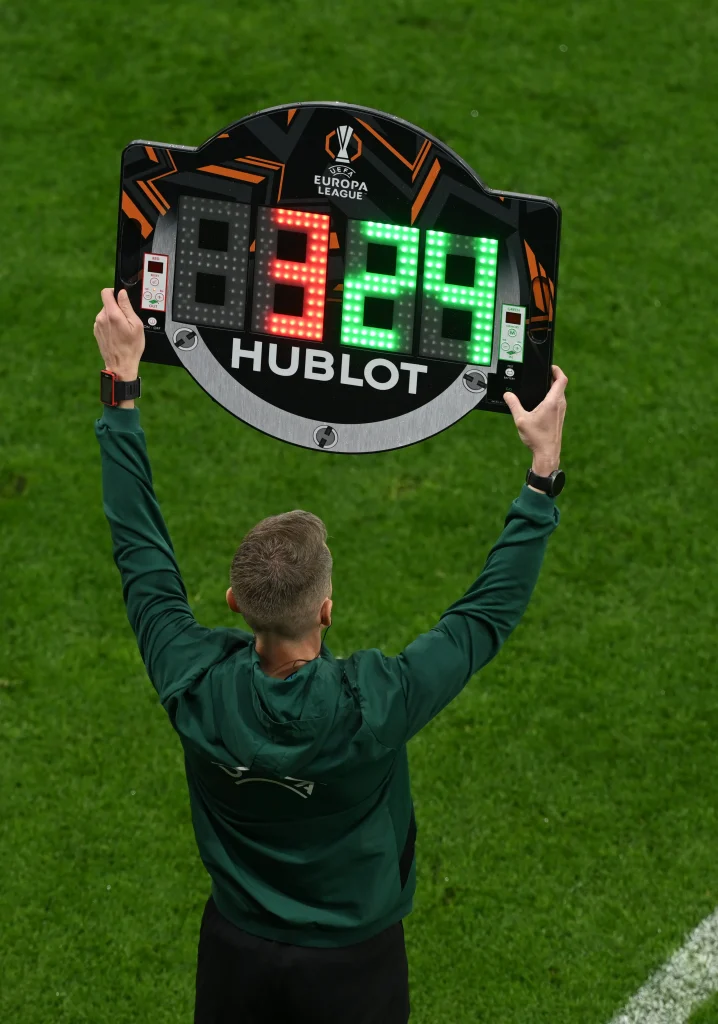
Throughout this season and during the final itself, another familiar presence remained visible beside the pitch. Added time appeared. Substitutions followed. Seconds counted down. For millions watching worldwide, these moments unfolded through Hublot, continuing a partnership with football that now reaches an important milestone.
Twenty years ago, Hublot made a decision that initially surprised much of the watch industry. In 2006, the Swiss watchmaker entered football through its partnership with the Swiss national team and became the first Haute Horlogerie Maison to invest in the sport. At the time, luxury watchmaking traditionally remained associated with motorsport, golf, or sailing, while football occupied a very different space. Hublot recognized something others had not fully understood yet. Football was already becoming a worldwide cultural force capable of connecting audiences across generations and continents.
The years that followed confirmed that vision repeatedly. Hublot later partnered with four FIFA World Cups and five UEFA European Championships while expanding collaborations with football figures including Kylian Mbappé, Alex Morgan and Ada Hegerberg. Over time, the iconic fourth-official board displaying substitutions and added time gradually became part of football culture itself. Millions recognize it instantly. The relationship no longer feels like sponsorship. It feels integrated into the sport.
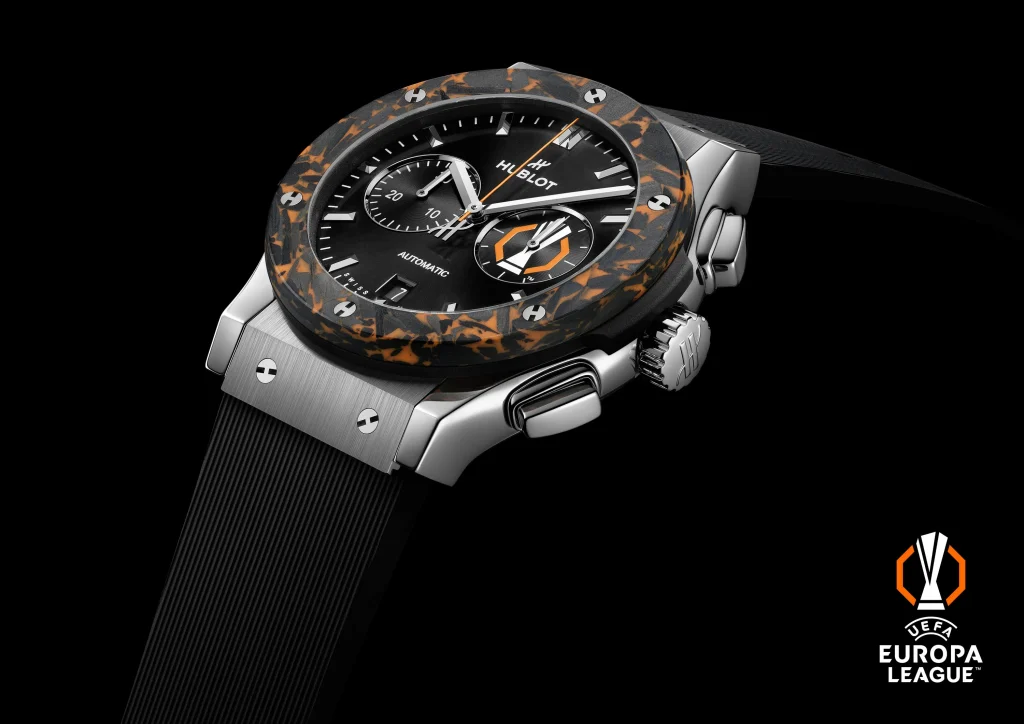
To mark this year’s tournament, Hublot introduced the Classic Fusion Chronograph UEFA Europa League Titanium Carbon, a limited edition created in only 50 pieces worldwide. Produced in a 42mm titanium case, the watch combines lightweight construction with technical materials and references directly connected to the competition. Its bezel uses a fusion of carbon fiber and orange fiberglass inspired by UEFA Europa League colors, while a manufacturing process involving heat and pressure ensures every individual pattern remains unique.
Additional details continue the connection between football and design. The UEFA Europa League logo appears integrated into the small seconds counter at three o’clock, creating another subtle reference for collectors and supporters alike. The watch itself ultimately reflects the same ideas that define both football and watchmaking: precision, timing, intensity, and emotion.