The luxury automotive world has gradually entered a different chapter. For decades, high-performance cars existed primarily around engineering figures, speed records, and technical innovation. Today, expectations extend much further. Clients increasingly seek environments carrying the same emotional and cultural value as the products themselves. The experience surrounding a brand now matters almost as much as the object being purchased. Showrooms no longer function simply as places of transaction; they increasingly become destinations where identity, community, and lifestyle intersect.
Few brands understand emotional connection better than Ferrari. Since its founding in 1947 by Enzo Ferrari, Ferrari built a world extending well beyond automotive engineering. The House established one of the strongest visual and cultural identities in the luxury sector, transforming the Prancing Horse into a global symbol associated with speed, craftsmanship, and Italian excellence. For generations, Ferrari ownership has represented more than a passion for cars; it has often become part of personal identity itself, creating a rare relationship between brand and community.
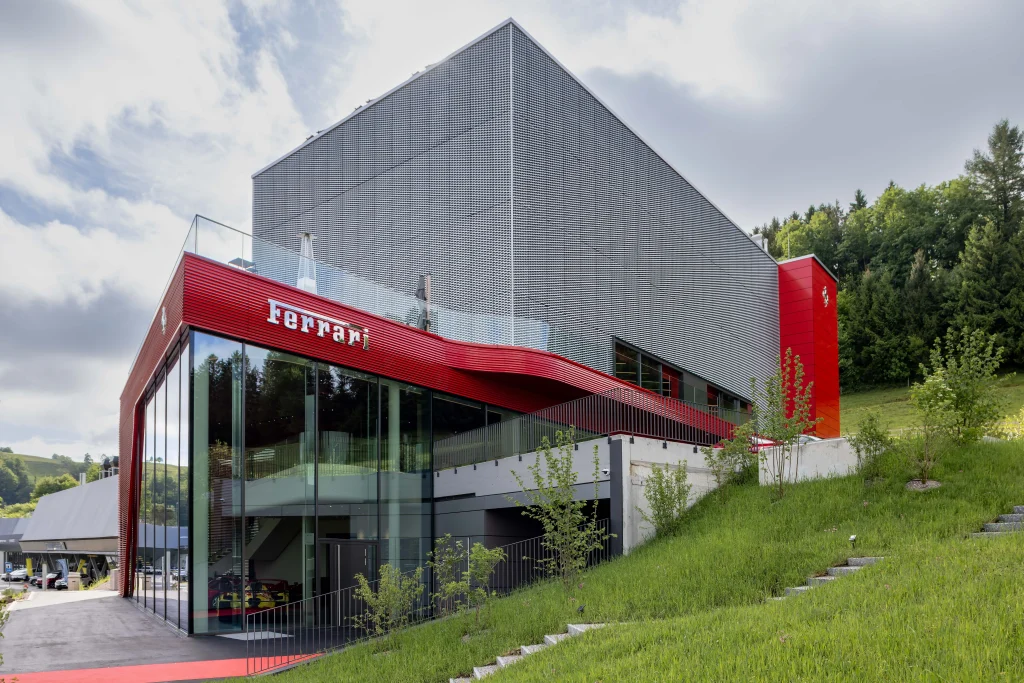
That relationship now enters a new phase through the opening of the latest Ferrari location developed by Kessel Auto Zug AG. The new destination marks an important moment in the brand’s retail evolution and introduces a more integrated vision of what the future of luxury automotive environments may look like. Developed according to Ferrari’s latest Corporate Identity, the project currently stands as the largest facility worldwide created under the new concept and signals a broader transformation taking place inside luxury retail itself.
The scale immediately communicates ambition. Extending across 6,620 square meters and occupying seven levels, the facility becomes the first Ferrari destination bringing together every principal area of the brand universe under one roof. The showroom, pre-owned division, workshop facilities, customer relationship spaces, and dedicated community areas coexist inside one environment designed to create continuity rather than separation. Architecture, functionality, and brand storytelling work together throughout the entire experience.
The philosophy behind the project centers around three principles shaping Ferrari’s new direction: experience, belonging, and the relationship between physical and digital worlds. These ideas increasingly influence luxury industries far beyond automotive culture because consumers no longer seek isolated transactions. They seek immersion. Connection. Recognition. Ferrari responds through spaces intended to create longer relationships and stronger engagement rather than brief interactions.
The opening event reflected that larger vision. Ronnie Kessel, Owner and CEO of the Kessel Group, welcomed guests alongside Ferrari Chief Marketing and Commercial Officer Enrico Galliera and Head of Ferrari Europe & Africa Reno de Paoli. Guests were also introduced to the Ferrari Amalfi Spider, Ferrari’s newest V8 Spider from Maranello, adding another dimension to an evening built around innovation and future direction.
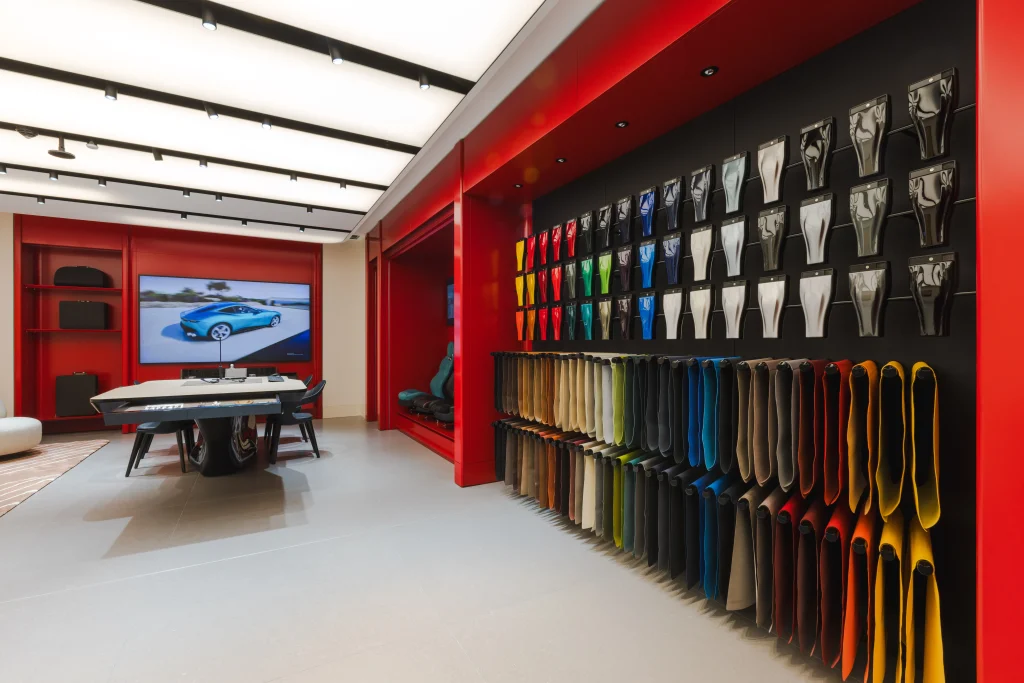
The design itself reveals how dramatically retail environments continue evolving. Throughout the building, dedicated spaces explore Ferrari heritage, design, performance, and community engagement while creating opportunities for visitors to move naturally between discovery and interaction. At the center of the concept sits the Piazza, envisioned as the emotional heart of the location. Inspired by traditional Italian public spaces, it was designed not as a waiting area but as a social environment intended to encourage authentic connections and ongoing relationships among clients and the broader Ferrari community.
Technology also plays an important role throughout the experience. Advanced digital tools support personalized interactions and customer journeys while carefully preserving direct human connection at the center. The intention never appears technological for its own sake. Instead, digital innovation functions as an extension of service and personalization, enhancing experiences without replacing the people behind them.