Every year, the Eurovision Song Contest creates its own temporary universe. Music remains at the center, yet the event has long expanded far beyond a competition between countries. It has become a meeting point for pop culture, television, fashion, humor, and moments no one planned in advance. Sometimes the performances people remember most are not those competing for points at all.
One of this year’s unexpected moments arrived through Eurovision 2026 hosts Victoria Swarovski and Michael Ostrowski. Together with Australian artist Go-Jo, better known to many viewers as “The Milkshake Man,” the trio introduced Opposites during the first Eurovision semifinal.
The performance immediately brought an additional surprise. Victoria Swarovski, known to millions primarily as a television host and public personality, returned to singing in a move few expected. The appearance had originally been planned as an interval act, yet audience reaction quickly changed the conversation surrounding the song.
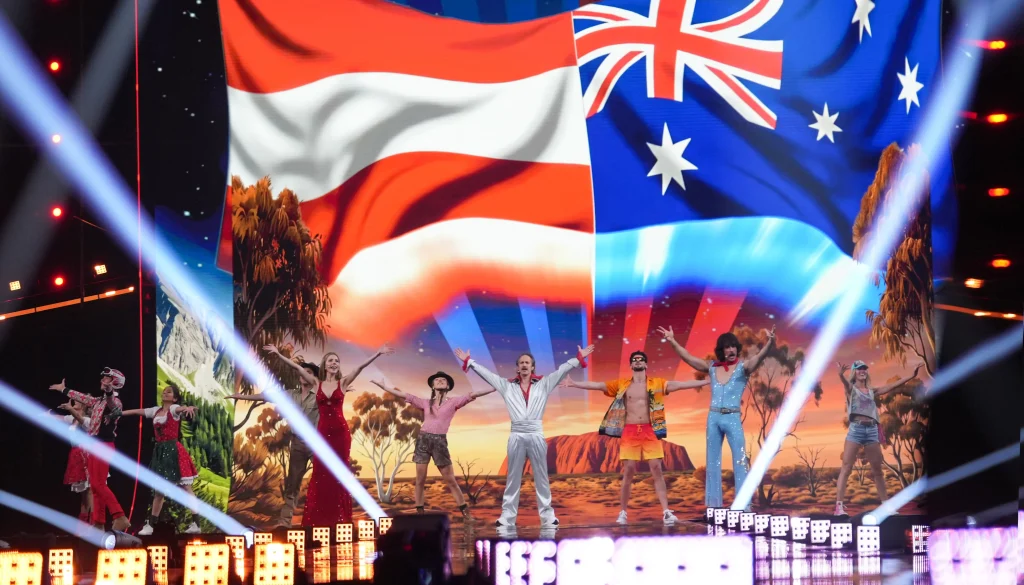
Soon after the live performance, viewers and Eurovision fans began discussing Opposites across social platforms and fan communities. The response arrived quickly and with unusual enthusiasm. Following the positive reaction, the decision was made to release the track across major streaming platforms.
Part of the song’s appeal came from its playful premise. For years, Eurovision audiences have joked about the recurring confusion between Austria and Australia — a running joke that gained momentum after Australia’s first participation in Eurovision in 2015. Opposites decided to place that confusion directly at the center of its story.
The title itself already suggested contrast. Different countries, different personalities, different musical references — all brought together with deliberate exaggeration and humor. Eurovision has always had a particular appreciation for ideas that might appear slightly absurd elsewhere.
Musically, the track moves through several directions at once. Musical theatre references meet pop melodies and rap sections, creating quick shifts in rhythm and energy. The structure feels intentionally unpredictable.
Its chorus arrives early and remains difficult to forget afterward. Certain songs quietly disappear after a single listen. Others continue replaying in the mind hours later, often without invitation.
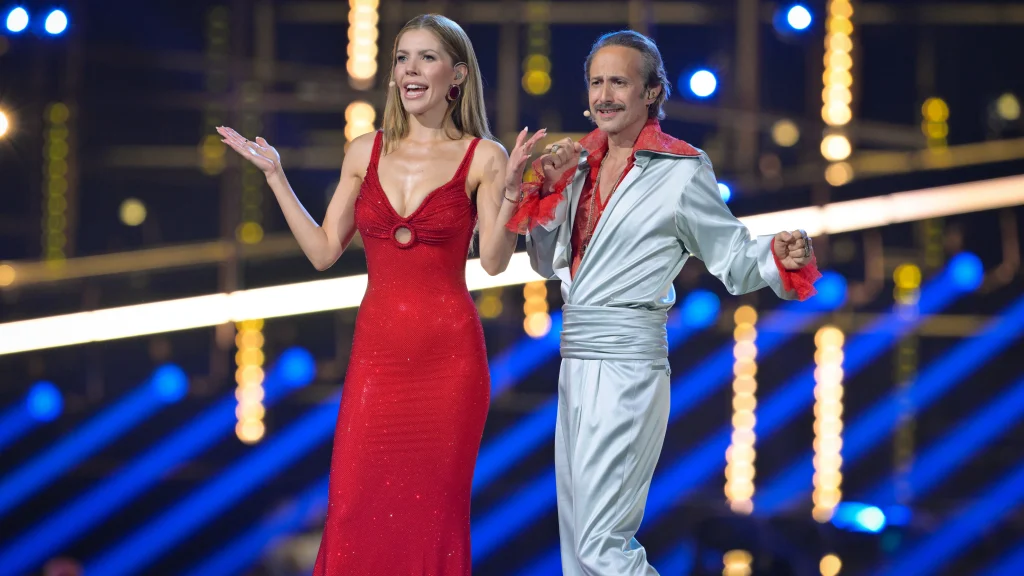
For Victoria Swarovski and everyone involved, the project also carried visible enjoyment. That atmosphere translated naturally into the live performance inside Vienna’s sold-out Stadthalle. Large productions often depend on precision, but audiences still recognize when performers are genuinely enjoying themselves.
The staging approached Eurovision with complete awareness of the competition’s history. Dramatic gestures, theatrical movement, changing musical dynamics, and visual humor all appeared throughout the performance. Nothing attempted restraint.
In many ways, Opposites functioned as a tribute to Eurovision itself. The performance acknowledged many of the elements audiences have come to expect and transformed them into part of the joke.
And perhaps that explains why the performance connected so quickly. Eurovision has always celebrated songs. But occasionally, it celebrates personality too.