For watchmaking houses, a manufacture has always carried a meaning that extends far beyond walls and machinery. It is where precision takes physical form, where technical skill meets human instinct, and where hundreds of individual gestures come together to create a single object. A timepiece may eventually arrive on the wrist, but its story begins long before — often inside spaces few people ever see.
This spring, Audemars Piguet opened a new chapter with the inauguration of its new manufacture in Meyrin. After three years of construction, the Swiss Haute Horlogerie house introduced a significantly expanded site dedicated to case and bracelet production as well as a New Technologies division. Nearly 200 employees have already moved into the new building, while the production area itself has increased almost fourfold compared to the previous Meyrin location. The inauguration on March 19 brought together local authorities, representatives of FdMP architectes, and members of Audemars Piguet’s leadership.
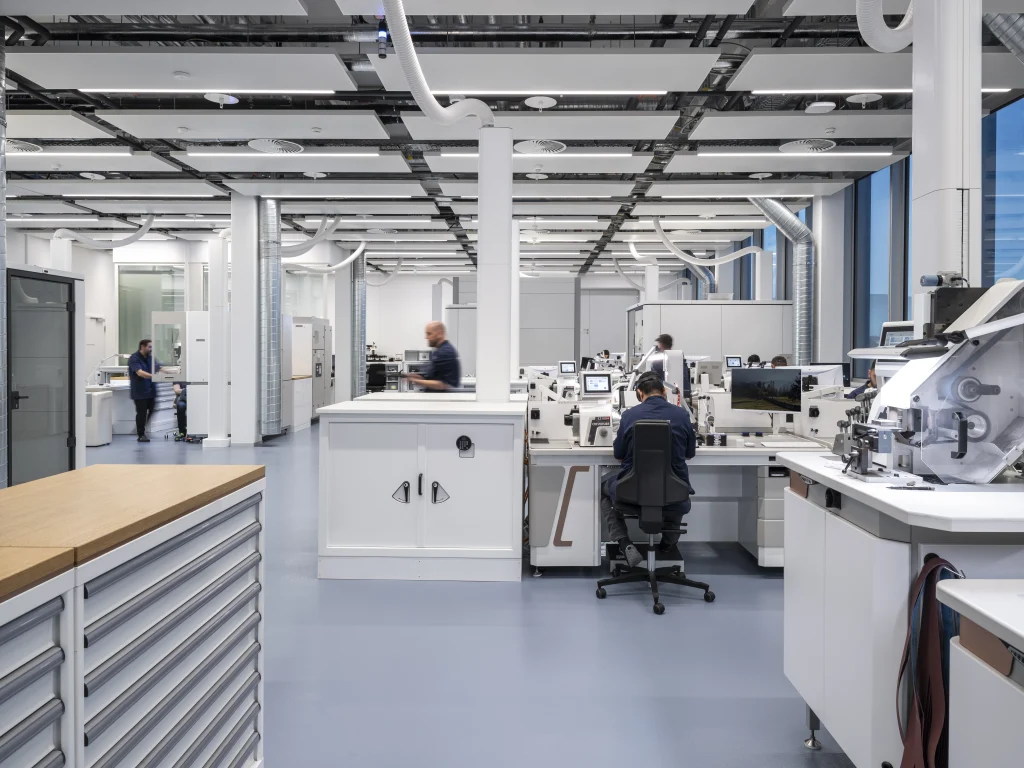
The project itself carries a particularly interesting story. Instead of beginning with an entirely blank page, Audemars Piguet chose to preserve and reinterpret an existing industrial structure formerly occupied by pharmaceutical company Uhlmann-Eyraud. Constructed between 1963 and 1965, the U-shaped building had long been recognized for its historical significance before being acquired by the Maison in 2023.
The site first underwent extensive restoration before receiving a new purpose. Alongside the original structure, architects introduced a four-story addition that completes the shape of the building, accompanied by two lateral extensions. Designed by Swiss studio FdMP architectes, the project now spans approximately 9,000 square meters — a considerable increase from the former 2,400-square-meter facility. The space can ultimately accommodate up to 350 employees.
Architecture often reveals how a company sees its future. Here, the guiding principles revolve around collaboration, adaptability, workplace comfort, and operational efficiency. Open environments encourage dialogue between departments, while various workspaces answer different professional needs. Quiet areas for concentration sit alongside collaborative zones, meeting rooms, and traditional offices, allowing employees to select settings according to their work style and daily rhythm. Flexibility played an equally important role during development. Production spaces were designed with future expansion already in mind. Technical systems, modular layouts, and adjustable partition structures allow the manufacture to evolve naturally as technologies and teams continue to grow.
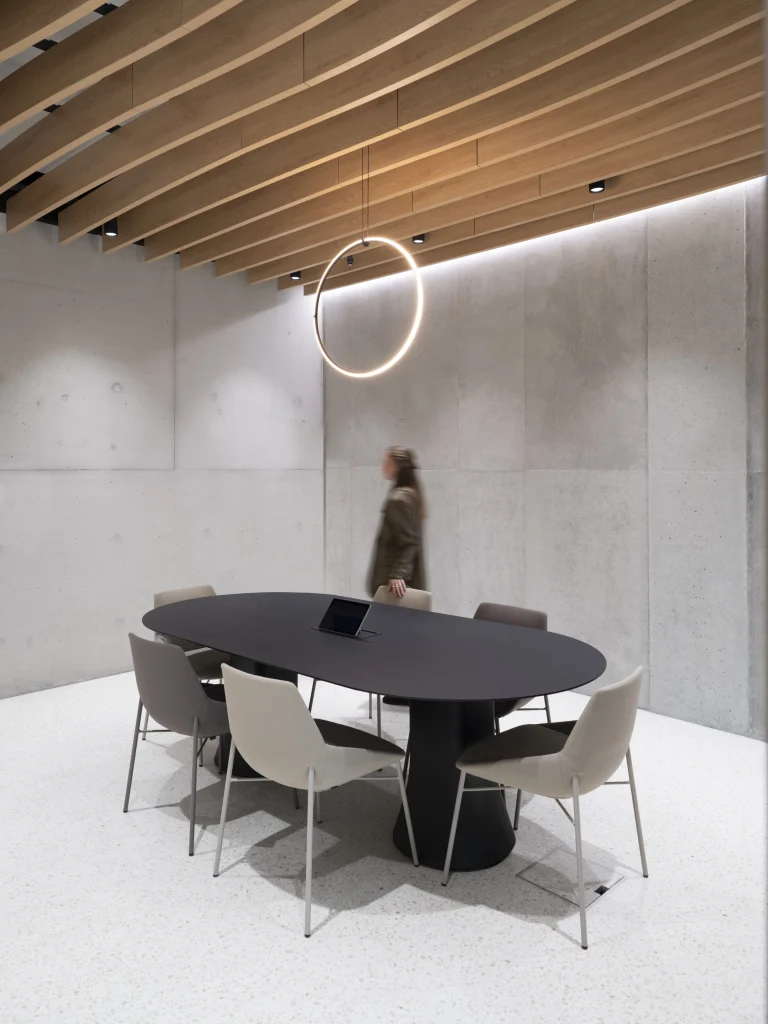
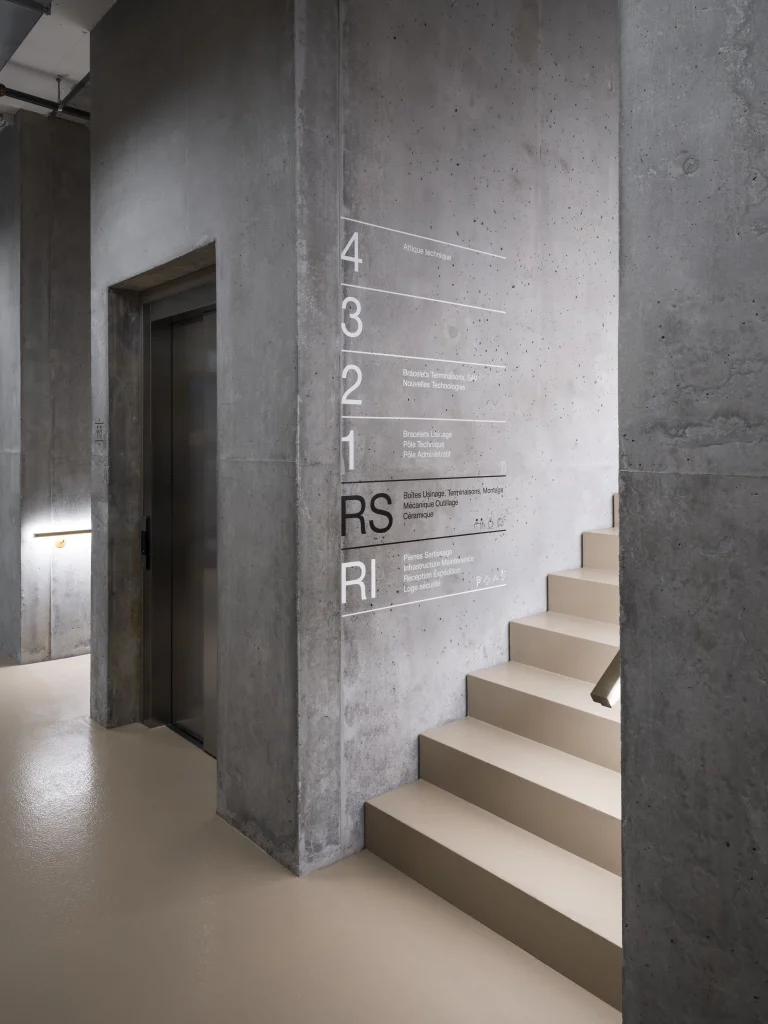
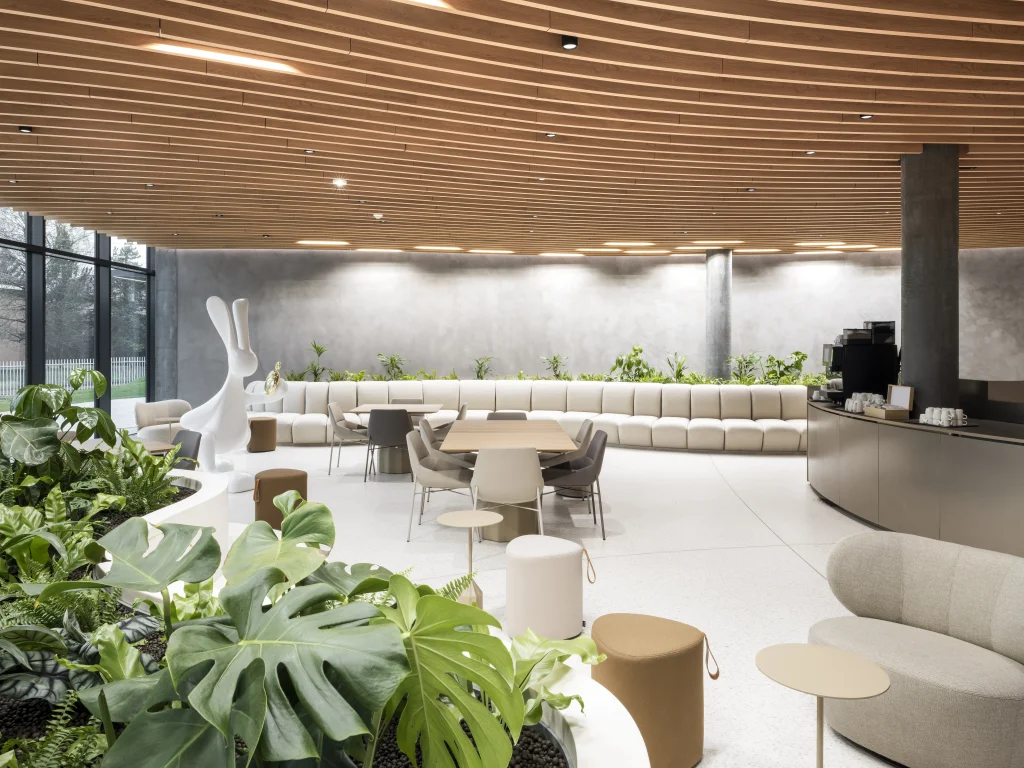
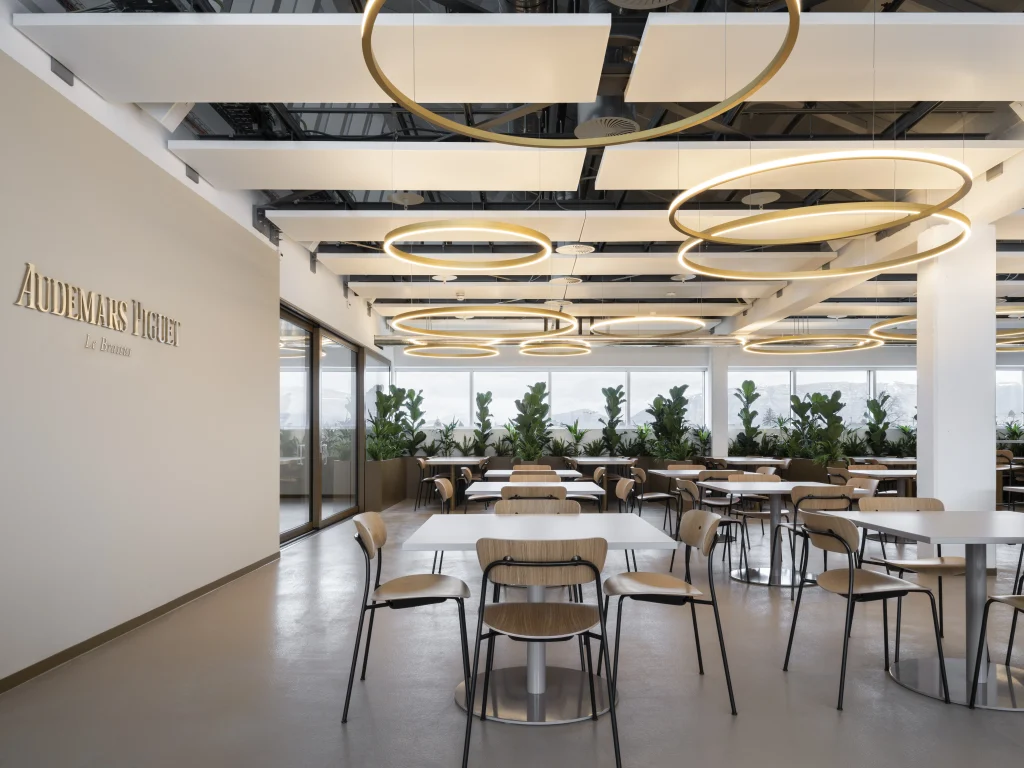
Daily experience inside the building received equal attention. Workspaces and communal areas revolve around a landscaped interior courtyard that acts as the visual center of the project. Visitor and employee entrances lead toward a shared gathering space equipped with a cafeteria, seating areas, and a large display screen. Large openings create visual connections with the courtyard, while the historic shed roof continuously introduces natural daylight throughout the building. Dynamic glass façades automatically respond to changing exterior conditions and regulate incoming light.
Environmental considerations also influenced every stage of development. Solar panels contribute to the site’s energy requirements, while rainwater recovery systems reduce dependence on potable water resources. Heat recovery technology and intelligent monitoring systems continuously regulate building performance and energy consumption. Accessibility formed another important aspect of planning, with direct proximity to Meyrin railway station and public transportation options supporting daily mobility choices.
Watchmaking has often been associated with tradition. Yet projects such as Meyrin suggest another reality: preserving history and preparing for the future no longer exist as separate ideas. Sometimes they share the same address.