Fashion has always extended beyond clothing. Throughout the history of haute couture, jewellery has played a central role in shaping a complete silhouette, introducing movement, texture, and character where fabric alone could not. The dialogue between couture and high jewellery continues to inspire designers who view precious objects as an extension of craftsmanship rather than simple accessories. Can a single bracelet express the same refinement as an expertly tailored garment?
The lasting importance of craftsmanship remains one of the defining values of the luxury industry. According to the Deloitte Global Powers of Luxury Goods 2024 report, heritage, artisanal expertise, and exceptional quality continue to rank among the strongest drivers of purchasing decisions within the luxury sector, particularly among younger high-net-worth consumers seeking products with lasting cultural value. The report also notes that clients increasingly appreciate creations whose stories are rooted in decades of savoir-faire instead of seasonal novelty. Such findings explain why many historic maisons continue to revisit their archives, allowing celebrated creations to speak to new generations without abandoning their original identity.
Few jewellers have explored the relationship between couture and jewellery with the consistency of Van Cleef & Arpels. Since its earliest years, the Parisian maison has treated precious creations as part of a complete aesthetic language, where movement, proportion, and elegance follow many of the same principles found in fashion design. Among the clearest expressions of this philosophy is the Ludo collection, a design first introduced in 1934 that remains closely connected with the house’s creative heritage.
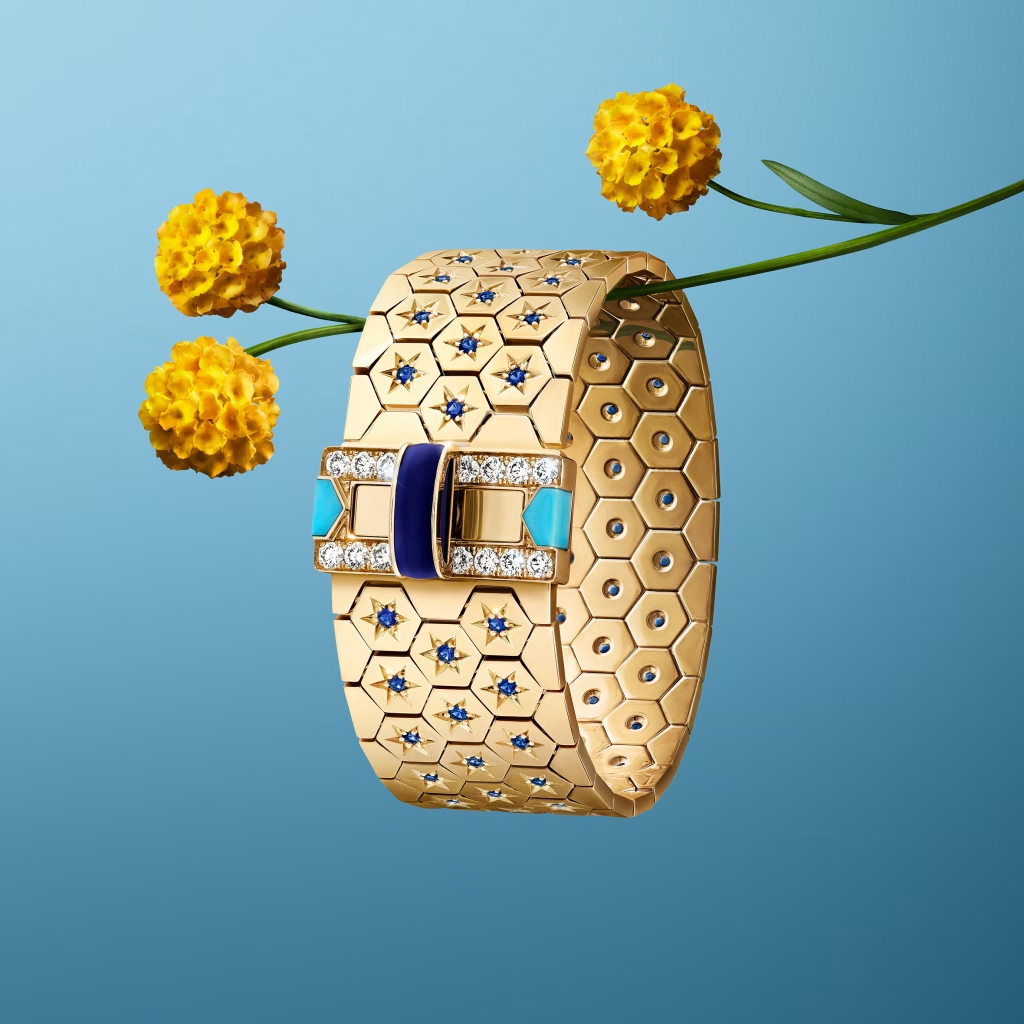
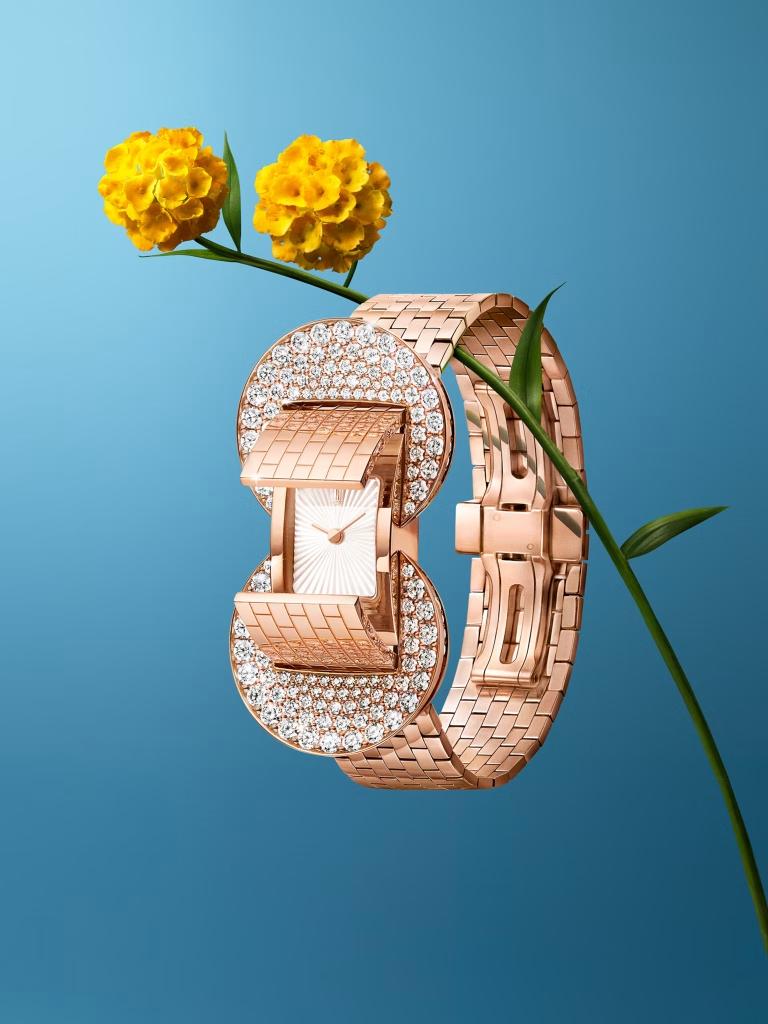
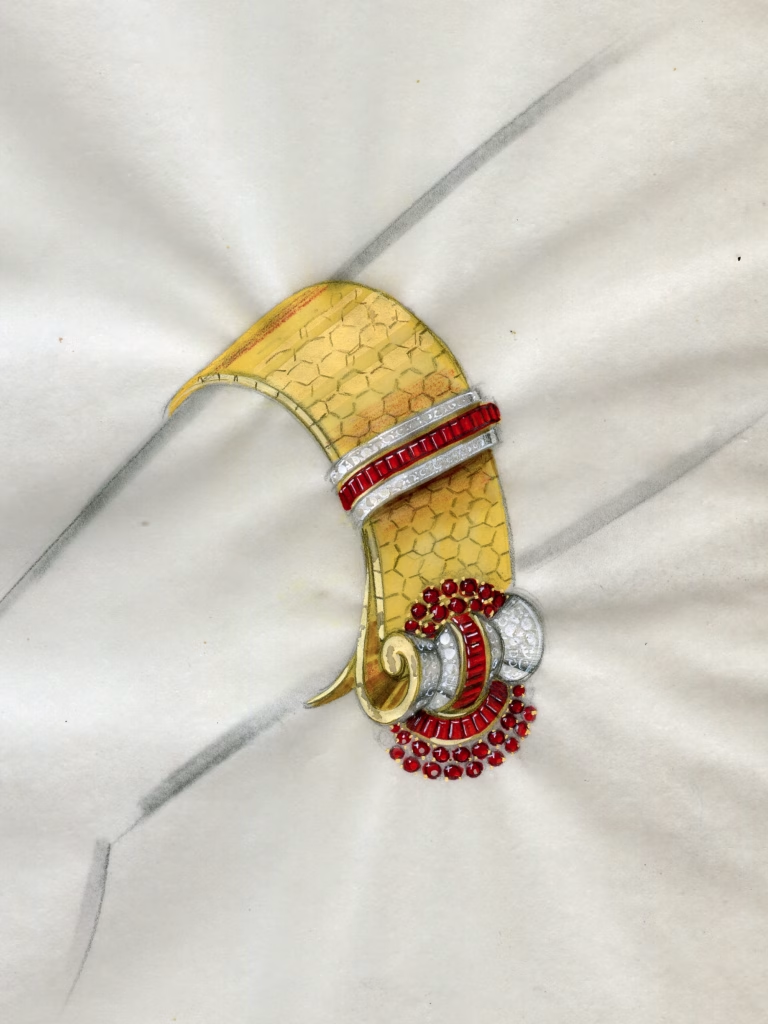
The Ludo bracelet owes much of its character to its extraordinary flexibility. Designed to wrap around the wrist with the softness of fine fabric, its construction recalls the graceful line of a couture belt defining the waist of an elegant silhouette. Clean geometry, balanced proportions, and restrained decoration allow the bracelet to communicate refinement through form instead of excess.
Across the decades, the design has continued to evolve while remaining faithful to its original identity. Decorative references inspired by abstract composition and the geometric vocabulary of Art Deco have accompanied each reinterpretation, preserving the personality of the bracelet while allowing it to remain relevant across generations. This careful continuity has made Ludo one of the maison’s most recognisable creations.
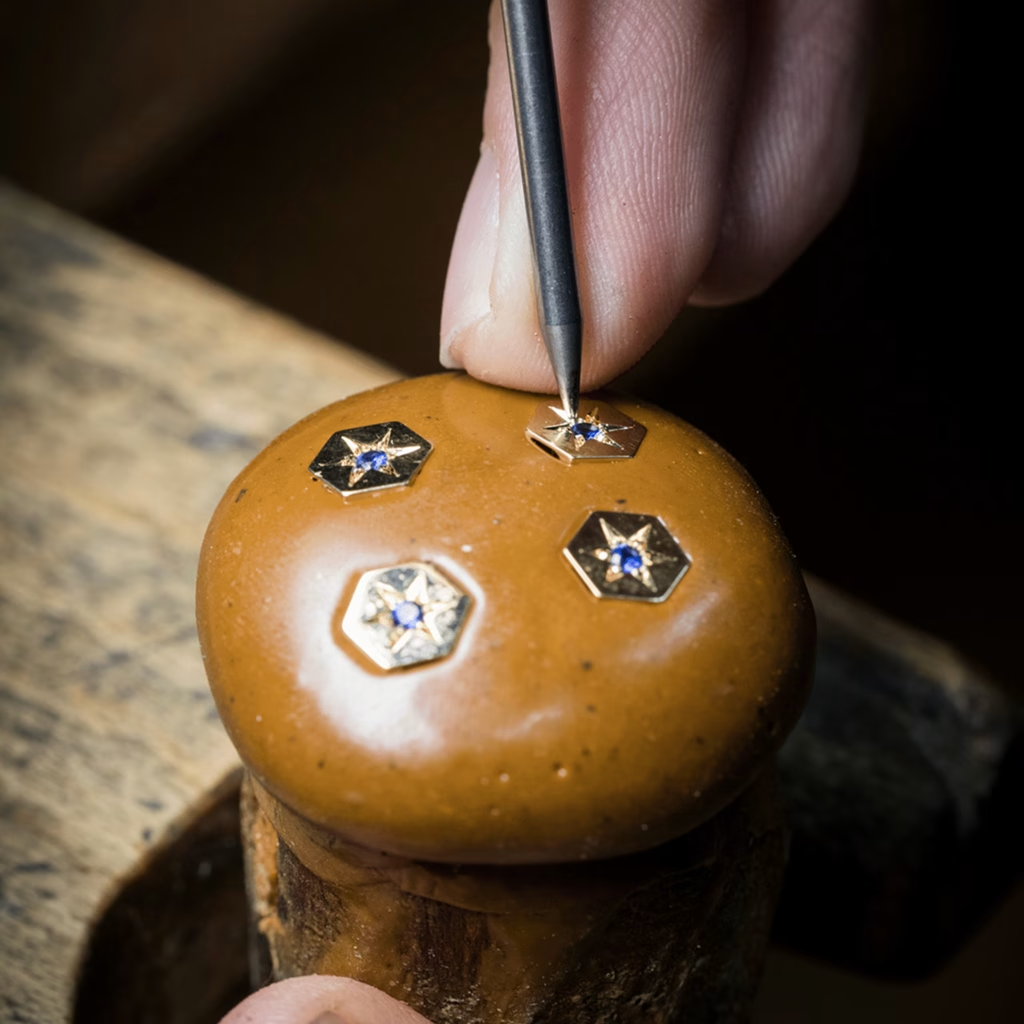
Its distinctive woven appearance is the result of meticulous craftsmanship. Van Cleef & Arpels’ artisans assemble delicate honeycomb or briquette motifs to produce a flexible metallic structure that follows the natural movement of the wrist. Precious stones are then integrated into the design with exceptional precision, creating a harmonious dialogue between metal, gemstones, and light without interrupting the bracelet’s fluid appearance.
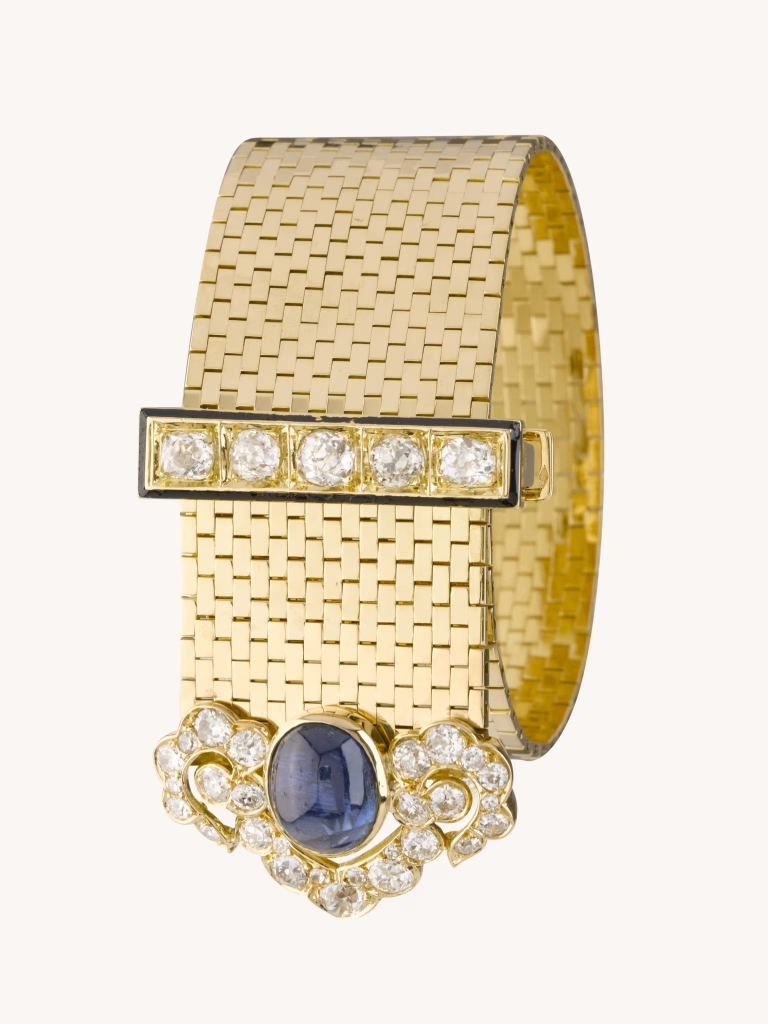
Created during the 1930s, the Ludo bracelet represents the same creative spirit that produced several of the maison’s defining inventions, including the Minaudière™ and the Mystery Set™ technique. Innovation has long been accompanied by an appreciation for French elegance, allowing technical mastery and artistic expression to develop side by side throughout the history of the house.
The collection also carries a personal story. Hélène Arpels, wife of Louis Arpels, became closely associated with the bracelet, frequently wearing it over long gloves or sleeves to emphasise its architectural lines. Her styling transformed the jewel into a visible statement, demonstrating how jewellery could become an active part of fashion rather than remaining a discreet finishing detail.
This sense of surprise continues through the Ludo Secret watches, where the dial remains concealed until the wearer chooses to reveal it. By hiding the indication of time within an elegant piece of jewellery, Van Cleef & Arpels continues a long-standing fascination with mystery and playful invention. The result is an object that invites curiosity, where every glance reveals something previously hidden and where jewellery and watchmaking continue a conversation that began almost a century ago.